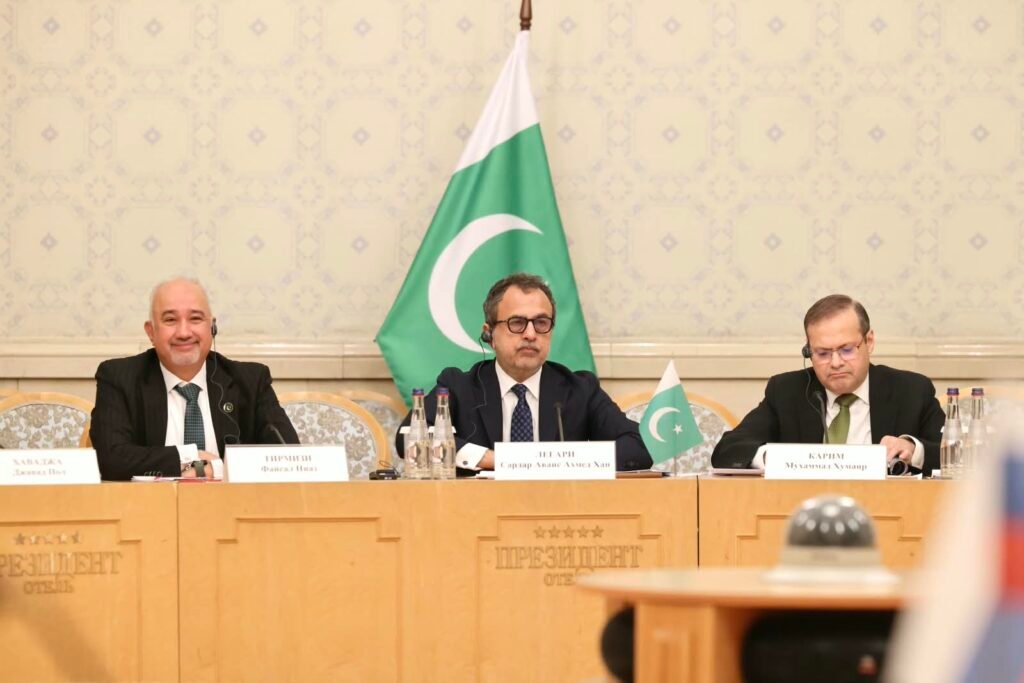
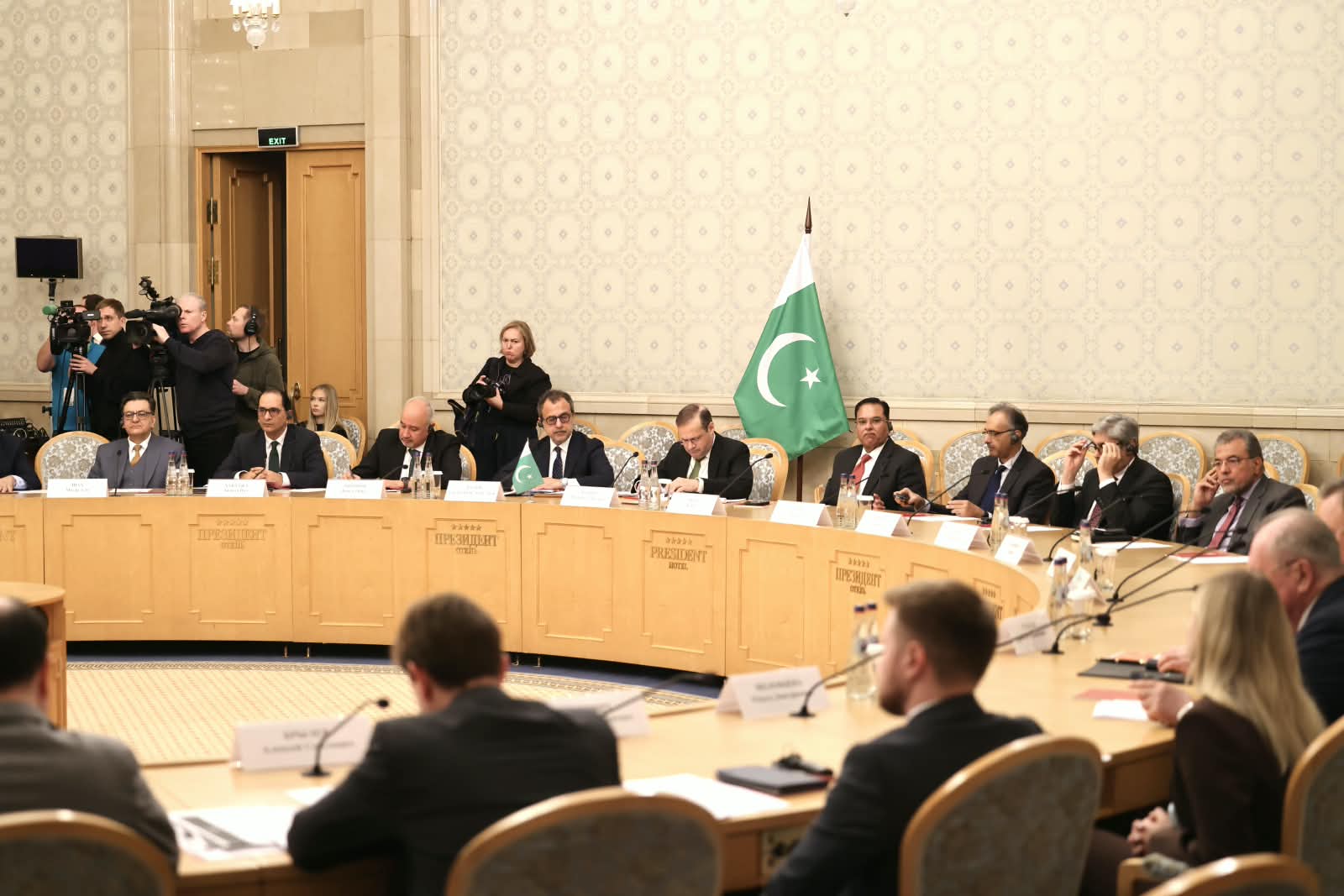
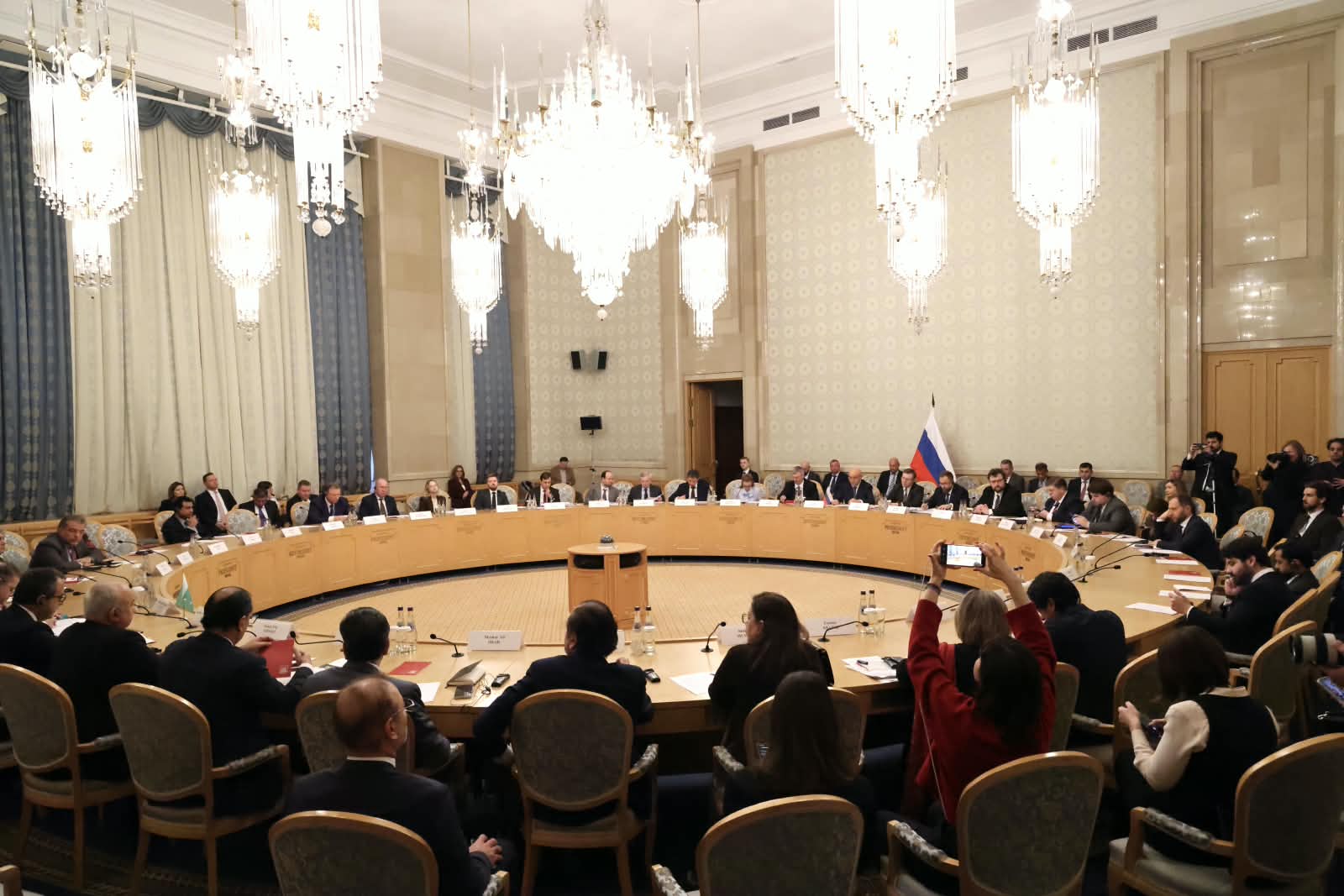
ISLAMABAD, Nov 25 (APP): The 11th Session of the Pakistan–Russia Intergovernmental Commission (IGC) on trade, economic, scientific and technical cooperation, in Moscow, signed a Protocol of the 11th IGC and the Programme for Economic Cooperation 2026–2030, providing a comprehensive framework for advancing bilateral economic relations.
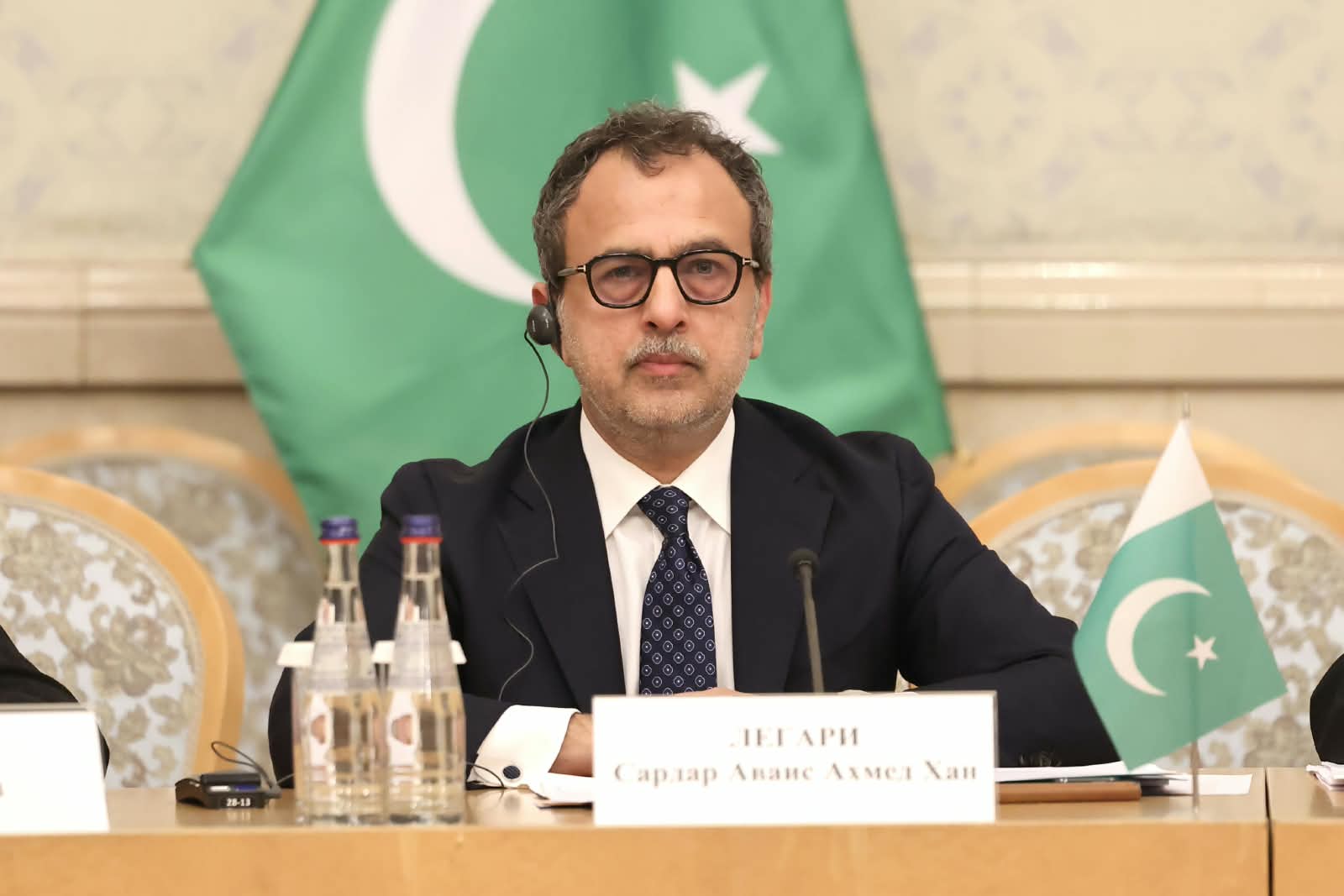
The session was co-chaired by Federal Minister for Energy (Power Division) of Pakistan Sardar Awais Ahmad Khan Leghari and Minister of Energy of the Russian Federation Sergei Tsivilev, a press release of Pakistan Embassy in the Russian Federation, on Wednesday, said.
“The signing of the Programme for Economic Cooperation 2026–2030 marks an important step towards institutionalizing long-term economic engagement and translating the considerable potential of Pakistan–Russia relations into tangible and mutually beneficial outcomes,” it was added.
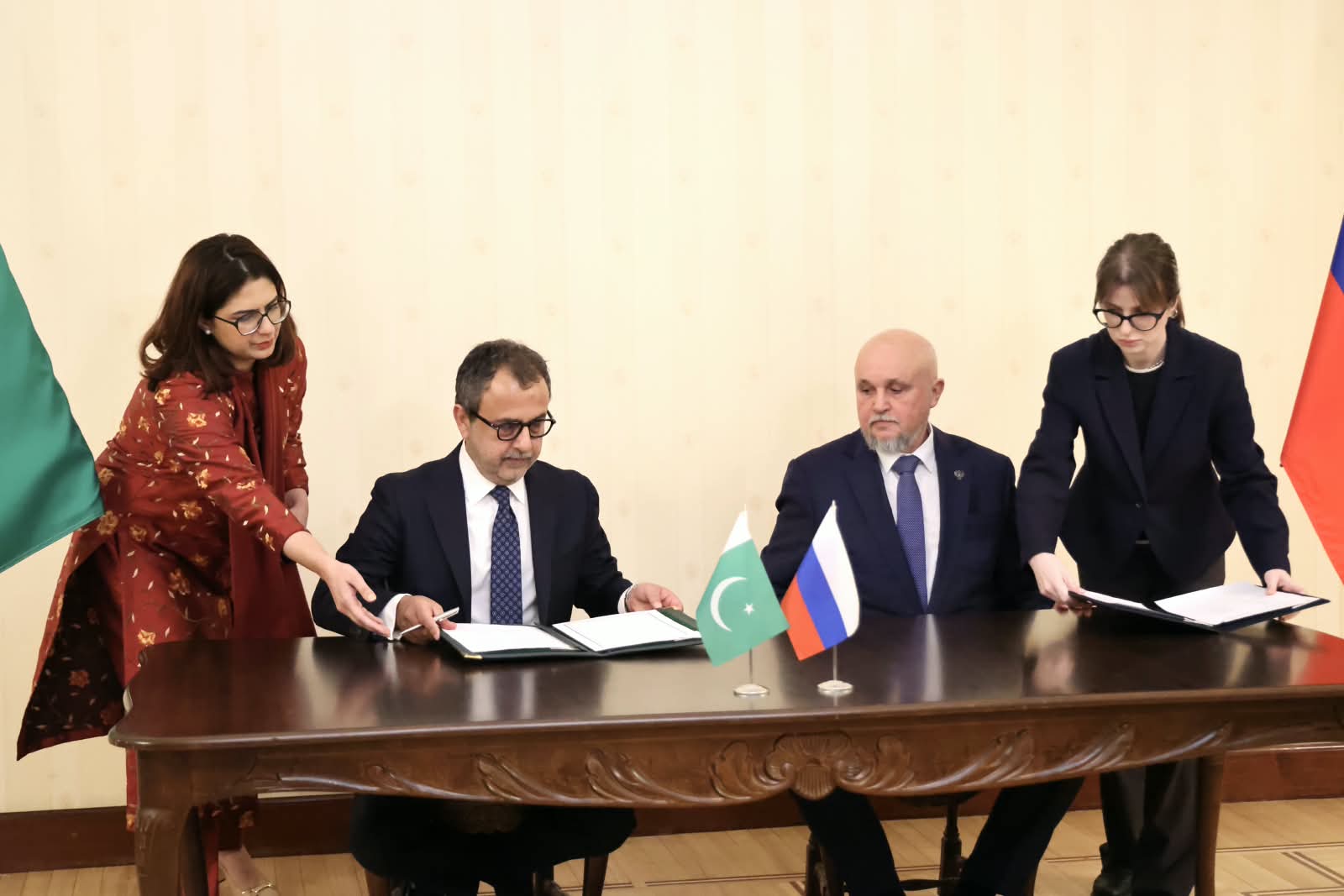
The two sides set a target of achieving a bilateral trade volume of US$5 billion by 2030, underscoring the considerable potential for expanding and diversifying economic relations through enhanced market access, investment facilitation and stronger business-to-business linkages.
Building upon the momentum generated during the 10th Session held in Islamabad, both sides reviewed progress on earlier understandings and held substantive discussions across priority sectors.
In trade and investment, both sides welcomed the finalization of the Joint Feasibility Study for a Free Trade Agreement between Pakistan and the Eurasian Economic Union.
The Trade Development Authority of Pakistan and the Moscow Export Center will facilitate business-to-business engagements across priority sectors.
Both sides also agreed to exchange information on investment incentives in their respective Special Economic Zones.
Energy cooperation remained central to the deliberations, with particular emphasis on oil and gas exploration, LNG supplies and gas distribution.
Pakistan will share investment opportunities in its onshore and offshore basins with Russian companies.
Cooperation will also be pursued in energy efficiency standards and energy-efficient cold storage facilities.
In the industrial sector, the commission identified opportunities for collaboration in metallurgy, heavy vehicles, agricultural machinery and mineral exploration.
In healthcare and pharmaceuticals, both sides agreed to advance cooperation in localized insulin production, clinical trials and the simplification of pharmaceutical registration procedures.
Recognizing the importance of agriculture and food security, the two sides agreed to expand agricultural trade and strengthen cooperation in livestock breeding, veterinary vaccines, fisheries, aquaculture and value addition.
In transport and logistics, both sides agreed to work towards the early launch of a pilot cargo train to Russia.
Further cooperation will encompass railway infrastructure, professional training of Pakistan Railways officers, intelligent transport systems and modernization of road infrastructure.
Substantive progress was also recorded in education, information technology and scientific cooperation.
Both sides agreed to expedite the approval of three intergovernmental agreements covering higher education, scientific and technical cooperation, and recognition of education, while encouraging new partnerships between universities.
Russia increased its quota of state-funded scholarships for Pakistani students.
The commission further agreed to strengthen cooperation in disaster management, culture, tourism and sports, recognizing the importance of people-to-people contacts in consolidating bilateral relations.
The co-chairs expressed satisfaction with the outcomes of the session and reaffirmed their commitment to the effective implementation of agreed measures.
It was agreed that the 12th Session of the Pakistan–Russia Intergovernmental Commission would be held in Pakistan in 2027.
Source: APP (Associated Press of Pakistan)