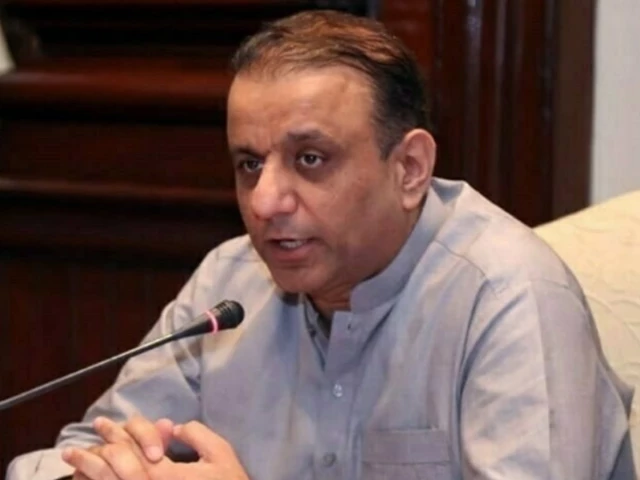
LAHORE, Oct 24 (APP):Federal Minister for Communications Abdul Aleem Khan said on Saturday that l government was working to improve road infrastructure across Pakistan through self-generated resources with the National Highway Authority (NHA) revenue target increased from Rs.66 billion to Rs.160 billion for the current year and its expenditure capped at Rs.50 billion.
He said,additional revenue generated through toll taxes and other sources would be utilized for constructing new roads and improving infrastructure across the country.
While addressing a meeting here at Lahore Chamber of Commerce and Industry (LCCI), the Federal Minister discussed major road projects,the financial sustainability of the NHA,industrial financing,regional trade connectivity and the need to address concerns raised by the business community.
LCCI President Ali Hussam Asghar, Senior Vice President(VP) Sardar Usman Ghani,members of the Executive Committee and senior members also spoke at the meeting.
Abdul Aleem Khan said that a substantial portion of the authority’s income was consumed by salaries, routine road maintenance,repairs and emergency rehabilitation of roads and bridges damaged by floods.
Referring to development funding,he mentioned Rs.224 billion allocated for ongoing projects under the 2024 Public Sector Development Program (PSDP).
He said a major share of the development funds was intended for national highway projects in Balochistan.
Federal Minister said that he had already presented proposals to the Prime Minister for Ease of Doing Business and address the difficulties faced by the industrial sector.
He urged banks to consider rescheduling loans of industrialists affected by high interest rates so that closed industrial units could be revived and business activity restored.
Running a business with loans carrying an interest rate of 25 percent was extremely difficult.
Abdul Aleem Khan assured the business community that its proposals and concerns would be presented to the Prime Minister and that he would make every possible effort to resolve the issues falling within his remit.
He emphasized that facilitating businesses was essential for strengthening Pakistan’s economy.
He said, work was underway on a proposed route intended to reduce the distance between Lahore and Islamabad from approximately 380 kilometers to 280 kilometers.
The project was expected to improve connectivity for Gujranwala, Gujrat, Lalamusa, Kharian and Jhelum, while reducing travel time from around three and a half hours to two and a half hours.
The project was being pursued with the aim of completion by the following year.
Abdul Aleem Khan said additional revenue generated through toll taxes had played an important role in making the Faisalabad road project possible.
He said that without these additional resources, the project might have remained delayed for several more years. He also referred to the dangerous conditions on the previous road and the risks faced by Motorway Police personnel while managing traffic and accidents.
He said that Sialkot Motorway was being expanded from four lanes to six lanes.
He also referred to an additional Rs 10 billion agreed from NHA-generated resources for the expansion.
Lahore–Khyber Motorway project was targeted for completion in 2027 and would improve road connectivity towards Khyber.
He said that Balochistan Expressway project was intended to improve access to remote areas and reduce the risks associated with dangerous roads and frequent accidents.
The project was expected to be completed by the end of the following year.
Abdul Aleem Khan said Pakistan could benefit significantly from its strategic geographical location by facilitating the transportation of Chinese goods through Gwadar and Karachi to Iran and other regional markets.
He said improved roads and trade corridors could strengthen Pakistan’s role in regional commerce and transit trade,create new business opportunities and improve connectivity with neighboring markets.
LCCI President Ali Hussam Asghar urged the government to amend business-related laws to make it easier for traders and industrialists to operate.
He said regulatory enforcement should focus on improving compliance rather than unnecessarily disrupting business activity.
Where appropriate,businesses should receive notices, fines and reasonable time to rectify violations instead of facing immediate registration of FIRs.
The LCCI President said the Lahore Chamber had worked on amendments to three laws and submitted its proposals to Speaker of the Punjab Assembly Malik Muhammad Ahmed Khan.
He also called for improvements to the Punjab Real Estate Regulatory Act in consultation with the real estate and realtor community.
He stressed the need for a transparent regulatory framework to formalize commissions and bring developers, realtors, government representatives and other stakeholders together.
Ali Hussam Asghar urged the National Highway Authority to consult major chambers of commerce before increasing toll taxes,explaining that higher toll charges directly increase freight and transportation costs and ultimately affect business competitiveness.
He also requested a dedicated meeting involving the NHA Chairman and Motorway Police officials to discuss complaints from exporters and transporters and develop practical solutions and appointment of focal person by the Minister.
LCCI Senior Vice President(VP) Sardar Usman Ghani called for high-quality road infrastructure and improved connectivity to industrial estates and commercial centers.
He said better roads were essential for facilitating industrial operations,commercial activity and the efficient movement of goods.
He urged the authorities to consult chambers of commerce before taking decisions affecting the business community,particularly increases in toll taxes and other measures which could raise operating costs.
The meeting was also attended by Member of the Punjab Assembly Shoaib Siddiqui, former LCCI President Mian Abuzar Shad, former Vice President Mian Zahid Javed, Amjad Chaudhry and Executive Committee members Hamid Raza, Zaman Naseeb, Shahzad Mahmood, Muhammad Ijaz Ghauri, Sahir Mushtaq, Naveed Ayub, Muhammad Yaseen, Mardan Ali Zaidi, Muhammad Ali, Amir Ata Barry, Huma Junaid, Chaudhry Zulfiqar Ali, Ali Raza, Naila Nadeem, Imad Mahmood, Tariq Mahmood and Syed Yousaf Jameel.
Source: APP (Associated Press of Pakistan)