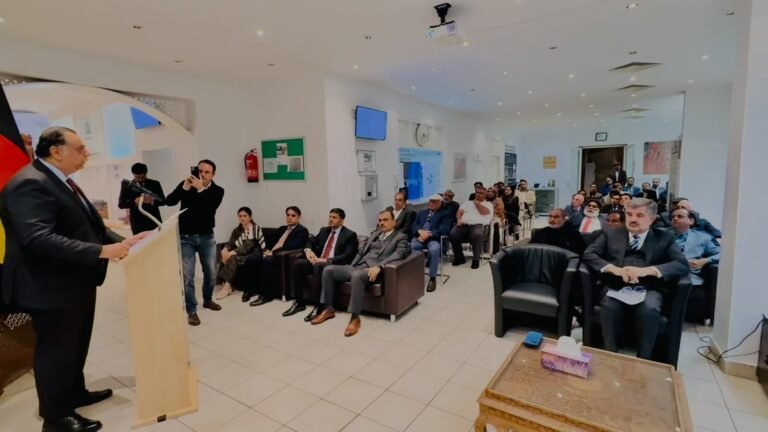
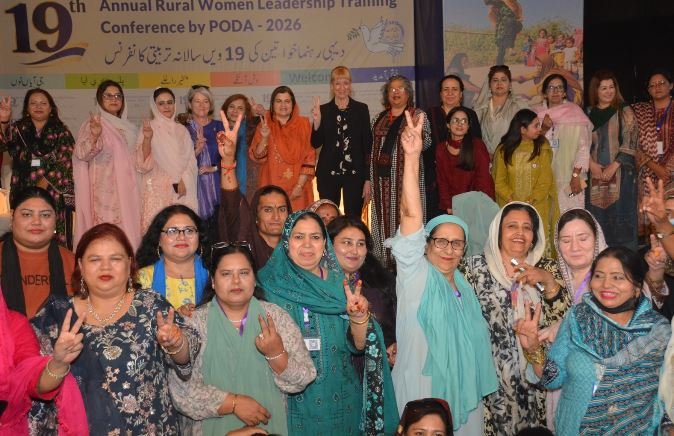
ISLAMABAD, Oct 28 (APP): Women leaders, government officials, diplomats and lawyers on Wednesday called for stronger enforcement of laws, improved access to justice and greater electoral inclusion for women and girls at PODA’s 19th Annual Rural Women Leadership Training Conference, where around 1,000 rural women leaders from approximately 120 districts highlighted barriers to voting, legal protection and reporting gender-based violence.
Addressing the conference’s second day, Nighat Siddique, Director General, Gender and Social Inclusion, Election Commission of Pakistan (ECP), said gender-mainstreaming initiatives had reduced the gender gap on electoral rolls from 11.8% in 2017 to 6.4% in 2026, although around nine million women remained unregistered.
She said the ECP had expanded its gender-related initiatives, including campaigns for national identity cards (NICs) and voter registration, gender complaint desks during the 2024 general elections, deployment of female electoral officials closer to their residences and gender-sensitive training for 1.4 million election officials.
Since November 2022, more than 4,000 youth awareness sessions had been conducted to encourage electoral participation, she added.
Siddique noted that significant disparities in voter turnout persisted, with some of the widest gaps recorded in major urban centres, including Karachi Central and Faisalabad, while Chakwal had one of the smallest gaps.
The ECP and NADRA would facilitate doorstep registration through mobile vans, she said, adding that NADRA had allowed identity card registration without a birth certificate or Form-B until June 2027.
Women leaders from across the country highlighted continuing difficulties in obtaining birth certificates, Form-B and national identity cards, stressing that documentation barriers and fear of intimidation continued to restrict women’s ability to exercise their voting rights freely.
Participants, including Nuzhat Shirin, former chairperson of the Sindh Commission on the Status of Women, MNA Sofia Saeed and Shahnaz Kapadia, president of the Islamabad Women Chamber of Commerce and Industry, appreciated PODA’s efforts to provide rural women with a platform to raise concerns and translate discussions into resolutions and practical action plans.
The conference’s second major session focused on preventing violence against women and girls, examining national and international best practices for prevention, legal redress and rehabilitation.
Mary O’Neil, Ambassador of Ireland to Pakistan, highlighted her country’s zero-tolerance approach to violence against women, emphasising prevention, protection, prosecution and coordination among institutions.
Ina Lapel, Ambassador of Germany to Pakistan, also acknowledged the efforts of women’s rights activists and stressed the need to safeguard women’s dignity and security.
Both ambassadors recognised that domestic violence remained a challenge and called for stronger adherence to the rule of law, greater support for survivors and collective action against gender-based violence.
Fauzia Viqar, Federal Ombudsperson for Protection against Harassment of Women at the Workplace (FOSPAH) and former founding chairperson of the Punjab Commission on the Status of Women, urged women to report harassment, warning that underreporting continued to undermine accountability and the effective implementation of existing laws.
She said workplace harassment laws covered not only incidents occurring inside offices but also relevant situations in places where women were present or travelling for work related purposes.
Reporting incidents, she added, is essential to securing justice and raising awareness of available legal remedies.
Shaheena Sher Ali, provincial minister for women development in Sindh, reaffirmed the provincial government’s commitment to protecting women’s rights, safety and dignity and pledged to strengthen efforts against violence and discrimination.
Rukhshanda Naz, women’s rights activist and chairperson of Noor Education Trust and Mera Ghar Shelter Home, brought a delegation of more than 10 lawyers to provide free legal assistance to women seeking remedies.
She said sustained advocacy spanning 28 years had helped civil society in Khyber Pakhtunkhwa secure domestic violence legislation, urging women to use existing laws to protect their rights and calling for coordinated efforts to achieve lasting change.
Noureen Bano Lehri, chairperson of the National Commission on the Status of Women (NCSW), said the high number of reported violence cases partly reflected improvements in reporting mechanisms, while social media had increasingly helped bring incidents of abuse to public attention.
She said the NCSW was working closely with the Supreme Court of Pakistan on issues affecting women and pursuing efforts to seek the permanent removal from social media of individuals found responsible for harassing women and girls or engaging in other forms of online abuse.
Emphasising the need to involve men and boys in preventing violence, Lehri said educating boys remained a neglected area.
The Commission is prioritising awareness sessions in boys’ colleges to promote understanding of their role in preventing violence against women and girls. She also shared information about helplines available to survivors.
Advocate Rubina Aman Brohi, chairperson of the Sindh Commission on the Status of Women, expressed concern over the growing incidence of technology facilitated gender-based violence.
Referring to the death by suicide of student Fahmida Leghari, she said the Commission was investigating the case in depth to help address such incidents more effectively.
She urged women not to remain silent out of fear and encouraged them to report online abuse.
She also highlighted multisectoral committees that bring government departments together to address gender related concerns, alongside proposed measures such as a Sindh medico-legal bill and one-stop protection centres to improve support for women.
Dr Sumera Shams, chairperson of the Khyber Pakhtunkhwa Commission on the Status of Women, acknowledged weaknesses in the implementation of existing laws but said the province’s domestic violence legislation would soon be fully enforced.
She stressed the need for targeted awareness initiatives to help women understand their legal rights and available protections.
Kiran Baloch, chairperson of the Balochistan Commission on the Status of Women, said fear of family reactions often discouraged girls from reporting violence or seeking assistance. She said awareness campaigns were being conducted in schools to encourage girls to speak out.
Baloch shared the provincial helpline 1089 and her office telephone number, 081-9204010, for reporting harassment and seeking assistance in Balochistan.
Women lawyers from Sindh also highlighted how greater female representation in the legal profession and sustained civil society efforts had encouraged more women to seek legal assistance for violence that had traditionally been treated as a private family matter.
The delegation reported a substantial increase in women’s representation in the legal profession, saying the number of women lawyers in Hyderabad division had risen from approximately 700–800 to more than 7,000 over a decade of sustained efforts.
The lawyers reaffirmed their commitment to helping survivors pursue legal action and ensuring that women could access justice without fear.
The conference brought together women leaders, representatives of national and provincial commissions, diplomats, policymakers and legal professionals to discuss electoral inclusion, gender based violence and practical measures to strengthen women’s access to justice and protection.
Source: APP (Associated Press of Pakistan)