
By Yawar Abbas
ISLAMABAD, Nov 01 (APP): For millions who risk losing their lives to hepatitis C simply because they cannot afford its diagnosis and treatment, the Prime Minister’s Programme for the Elimination of Hepatitis C has emerged as a beacon of hope, offering free screening, medicines and treatment to save lives and protect families from the devastating consequences of the disease.
Hepatitis C has long been a silent threat, often discovered when the disease has already begun damaging the liver. For poor families, the fear of diagnosis is compounded by the inability to afford expensive medical tests and treatment.
Now, the Prime Minister’s National Programme for the Elimination of Hepatitis C is offering a new ray of hope, bringing free screening, diagnosis and treatment within the reach of people who might otherwise remain untreated and vulnerable to life-threatening complications.
The programme represents a significant step towards protecting lives and ensuring that poverty does not deprive anyone of the opportunity to recover from a disease that is now largely curable with modern medicines.
The scale of the challenge is enormous. Around 60 million people worldwide, including an estimated 11 million in Pakistan, are affected by hepatitis C.
Transmitted primarily through infected blood, contaminated syringes and improperly sterilized or shared blades, the disease is often described as a silent killer because it can remain undetected for years before causing serious liver complications, including cirrhosis and liver cancer.
Despite its potentially devastating consequences, hepatitis C is curable in most cases, making early diagnosis and timely treatment essential to saving lives. Recognizing the financial barriers faced by millions of Pakistanis, the government has introduced free screening, diagnostic testing and treatment under the Prime Minister’s initiative.
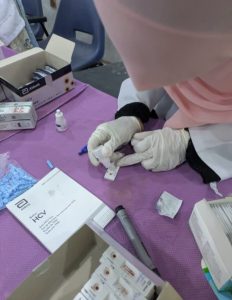
Under the programme, patients are being provided free PCR diagnostic tests, which normally cost around Rs 8,000, while treatment worth approximately Rs 34,000 to Rs 68,000 is also being provided without charge.
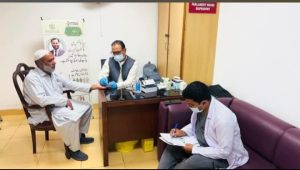
For low-income families, this financial support represents substantial relief. Many patients postpone medical examinations or avoid treatment altogether because they cannot afford diagnostic tests and medicines. By removing these financial barriers, the programme aims to ensure that economic hardship does not become a reason for preventable illness, liver complications or loss of life.
Initially launched in Islamabad, Gilgit-Baltistan and Azad Jammu and Kashmir, the programme is envisaged to extend its free screening and treatment facilities across the country, bringing millions of people within the reach of essential healthcare services.
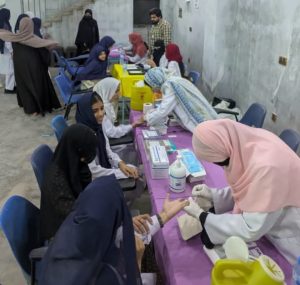
Health Ministry officials say the programme is designed to address the disease through a comprehensive approach involving mass screening, early diagnosis, treatment, public awareness and systematic follow-up of patients.
They said hepatitis C often remains undetected for years because infected individuals may not experience noticeable symptoms during the early stages. By the time complications emerge, the disease may have progressed to serious liver damage, cirrhosis or even liver cancer.
An official of the Ministry of National Health Services said the government’s priority was to ensure that financial constraints did not prevent anyone from accessing essential healthcare.
“The programme is based on the principle that every citizen deserves access to screening and treatment, irrespective of their financial circumstances. No person should lose their life simply because they cannot afford a diagnostic test or medicines,” the official said.
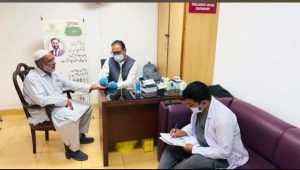
The District Health Office (DHO) Islamabad is also playing an important role in taking the initiative to communities through free screening facilities, awareness activities and coordination with public sector institutions.
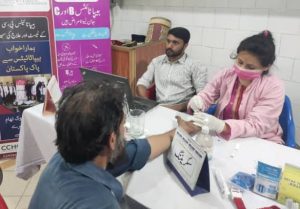
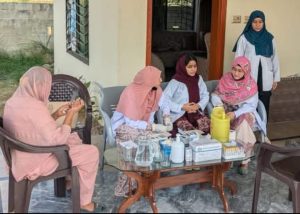
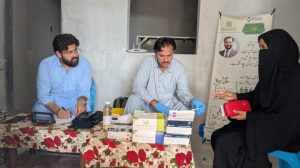
DHO officials said screening activities were being conducted at designated healthcare facilities and through special camps to facilitate people who might otherwise not approach hospitals for testing.
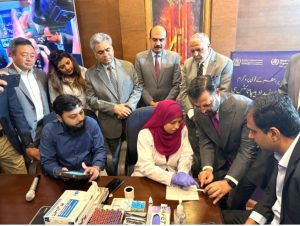
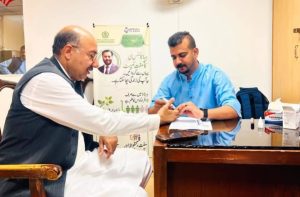
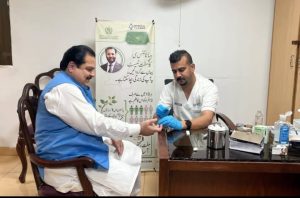
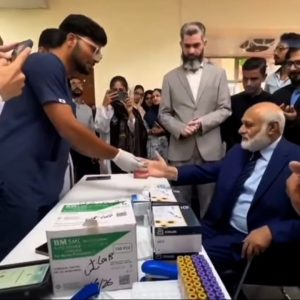
They said the office had also extended screening services to parliamentarians and staff members of the National Assembly Secretariat under the directions of Federal Health Minister Syed Mustafa Kamal.
According to DHO officials, free screening, treatment and medicines are available under the programme, while public awareness is being strengthened to encourage people to undergo testing without fear or hesitation.
“Early diagnosis is the most effective way to prevent the complications associated with hepatitis C. Our objective is to reach people before the disease progresses and ensure that those testing positive are connected with treatment facilities,” a DHO official said.
The programme has established 17 screening points in Islamabad, while the government is working to expand screening coverage across the country. The ministry has also been pursuing a coordinated approach to reach priority populations and ensure that diagnosed patients complete their treatment.
Medical experts believe the initiative could substantially reduce the country’s hepatitis C burden if accompanied by sustained screening, public awareness and strict infection-prevention measures.
Dr Maqsood Malik, a senior liver specialist, said hepatitis C was a curable disease in most cases, provided patients were diagnosed and completed the recommended course of treatment.
“One of the biggest challenges is that people often discover the infection at an advanced stage. Modern antiviral medicines can cure the majority of hepatitis C patients, usually through a relatively short treatment course.”
The most important step is to identify infected individuals early and ensure that they receive proper medical care, the doctor said.
Dr Tauqeer Ahad, another physician associated with public healthcare services, highlighted the importance of free screening, particularly for people from low-income backgrounds.
“Many patients avoid diagnostic tests because of financial difficulties. When screening and treatment are provided free of cost, it removes a major barrier to healthcare. This programme can save thousands of families from the financial and emotional consequences of a serious illness,” the doctor said.
Dr Naila Shamim, a medical expert, emphasized that treatment alone would not be sufficient without preventive measures and public awareness.
“Hepatitis C spreads primarily through contact with infected blood, including the use of contaminated syringes, unsafe medical procedures and improperly sterilized instruments. People must avoid sharing needles and razors, ensure the use of sterile medical equipment and seek screening whenever they have a potential exposure,” the doctor said.
The expert added that community awareness, safe blood transfusion practices, infection-control standards in healthcare facilities and responsible medical practices were essential to preventing new infections.
The programme’s expansion to Gilgit-Baltistan and Azad Jammu and Kashmir is particularly significant, as residents of remote mountainous communities often face geographical and financial challenges in accessing specialized healthcare facilities.
By extending screening and treatment services to these regions, the government aims to reduce disparities in healthcare access and ensure that people living outside major urban centres also benefit from the national elimination initiative.
Another important aspect is the use of coordinated patient-tracking mechanisms to improve follow-up and ensure that people diagnosed with hepatitis C are not lost between screening and treatment.
The ministry is also working towards strengthening coordination among healthcare institutions to improve programme implementation.
Federal Health Minister Syed Mustafa Kamal has emphasized the need for nationwide screening and a coordinated response to eliminate hepatitis C. The government has also highlighted the scale of the challenge, with millions of Pakistanis estimated to be living with the infection.
For the programme to achieve its intended objectives, continuity will be crucial. Regular screening, uninterrupted availability of medicines, reliable diagnostic facilities, trained healthcare workers and effective monitoring will determine its long-term success, Dr Saeed Kareem, a social activist, said.
He said that for a daily-wage worker unable to afford expensive medical investigations, a mother worried about her family’s health or an elderly person who has postponed testing for years, “free screening and treatment can mean the difference between prolonged suffering and recovery.”
“If implemented effectively and sustained through strong institutional commitment, the Prime Minister’s National Programme for the Elimination of Hepatitis C could become one of Pakistan’s most consequential public health interventions, protecting lives, relieving poor families of medical expenses and bringing the country closer to the goal of a hepatitis C-free Pakistan,” Dr Kareem said.
Source: APP (Associated Press of Pakistan)