FAISALABAD, Oct 31 (APP): Deputy Commissioner (DC) Muhammad Nauman Siddique has announced the appointment of Additional Deputy Commissioner Headquarters as a focal person to ensure priority-based resolution of business community issues while pledging regular consultations with industrialists and traders to translate their concerns into practical solutions.
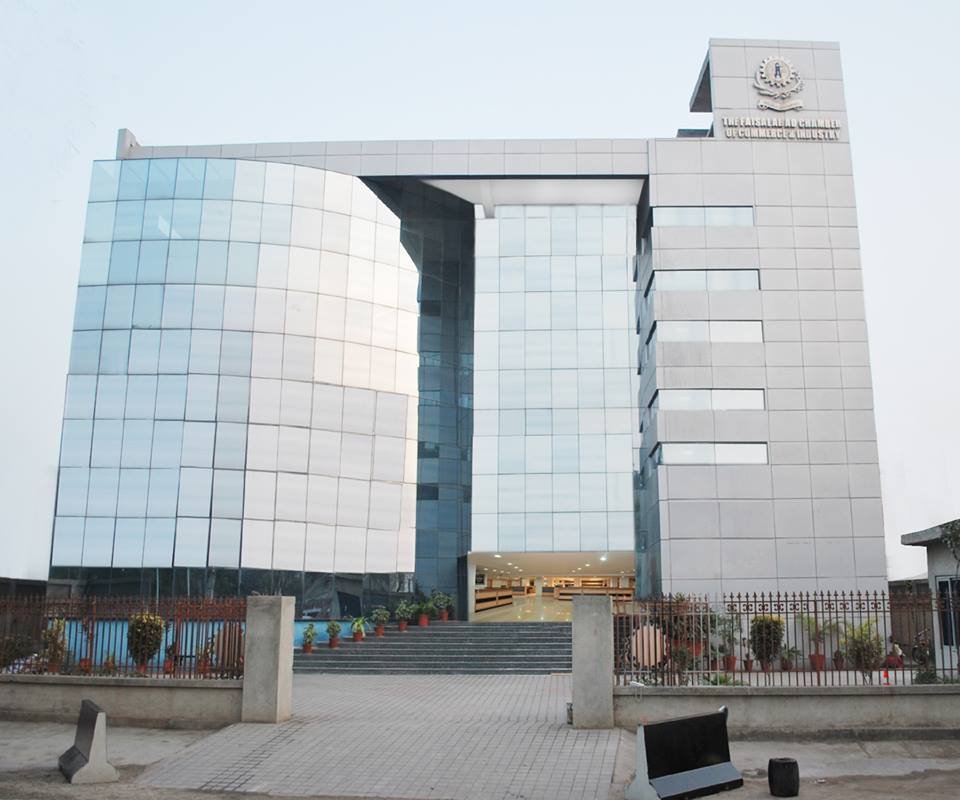
Addressing a gathering of traders and industrialists at Faisalabad Chamber of Commerce & Industry (FCCI), the deputy commissioner said that district administration was committed to create a business-friendly environment by facilitating investors, simplifying official procedures and addressing the problems affecting industrial and commercial activities.
He said that the government had shifted the issuance of several No-Objection Certificates (NOCs) and permits to online platforms, enabling applicants to obtain these facilities from their homes round the clock. However, many people were still visiting government offices unnecessarily due to a lack of awareness about the digital facilities.
To bridge this information gap, he announced that the focal person from Deputy Commissioner’s Office would arrange an awareness session next week to familiarize the business community with online application procedures and available government services.
Highlighting steps to simplify business regulations, he said that several unnecessary permissions previously required for establishing petrol pumps had been abolished. Under the revised requirements, an applicant needed four kanals of land situated along a 60-foot-wide road.
He invited traders and industrialists to identify other redundant regulatory requirements so that these could also be taken up with the relevant authorities for permanent removal.
Regarding the city’s civic infrastructure, the deputy commissioner acknowledged that considerable improvement was still required but said sanitation coverage had increased from approximately 40 to 60 percent.
Having recently assumed additional charge as Administrator of the Municipal Corporation, he said that three plans had been prepared to improve street lighting while illumination arrangements had already been completed on 39 out of 76 priority roads identified in the first phase.
He said that development schemes worth Rs30 billion were currently under execution through the Water & Sanitation Agency (WASA), adding that the improvement of major sewerage lines would be prioritized and completed by December 2027.
The deputy commissioner assured the business community that sealing shops and factories would not be the preferred course of action for dealing with regulatory violations, as the administration could instead impose challans or fines in accordance with the relevant rules.
On the city’s transport infrastructure, he said that metro project could be completed by July 2027, subject to the availability of funds.
He also highlighted the ongoing conversion of Satiana Road into a dual carriageway, saying that it would considerably reduce the travelling distance to Lahore through the M-3 Motorway.
However, he pointed out that differences between the federal and provincial governments over construction of an interchange were delaying progress on this aspect.
He also assured the participants that the administration would facilitate the allocation of land for new graveyards, addressing another pressing civic requirement of the expanding industrial city.
Emphasizing the role of the private sector in strengthening public healthcare, the deputy commissioner appreciated Faisalabad’s business community for extending assistance to 12 government hospitals.
He described Allied Hospital as the largest hospital in Punjab, with around 10,000 patients visiting its outpatient department daily.
He said that deficiencies in facilities at the other government hospitals had also been identified so that industrialists and philanthropists could be encouraged to contribute towards improving healthcare services across the district.
Regarding rehabilitation facilities, he disclosed that a private organization was constructing a rehabilitation centre on a site measuring approximately 80 marlas, adding that no comparable facility was currently available in the public sector.
He also assured the FCCI’s elected leadership of arranging a meeting with Punjab Chief Minister (CM) Maryam Nawaz to present Faisalabad’s development priorities and seek approval for additional major development projects.
To maintain direct engagement with the business community, he pledged to hold meetings with its representatives every three months so that their concerns could be addressed without unnecessary delays.
The deputy commissioner further observed that Faisalabad had considerable potential for educational advancement, but lacked a quality university in the private sector.
He stressed the need for collective efforts to establish a reputable private-sector university in the city.
Earlier, FCCI President Arif Ehsan Malik in his welcome address highlighted the industrial, commercial and business potential of Faisalabad and outlined the major challenges requiring the attention of the district administration.
He said that the city’s industrial estate, spread over more than 8,000 acres, had evolved beyond its traditional textile-based identity, with automobile manufacturing, mobile phones, tiles, foundries and several other industries now forming part of its expanding industrial landscape.
FCCI president stressed the need for an effective coordination mechanism between the district administration and business community, proposing the appointment of a dedicated focal person, a transparent one-window operation for NOCs and revenue-related matters, and a clearly defined industrial inspection framework to regulate visits by different government departments.
He also called for special facilitation camps for Small and Medium Enterprises (SMEs), alongside urgent measures to address deteriorating urban infrastructure, sanitation and sewerage problems.
FCCI president also called for timely completion of the metro project, allocation of land for a new graveyard, diversion of heavy traffic towards ring roads, expansion of government hospitals, establishment of a modern rehabilitation centre and provision of clean drinking water through WASA.
Presenting a broader economic vision for Faisalabad, Arif Ehsan Malik proposed that the city should be officially recognized as the “Circular City of Pakistan” in view of its significant contribution to recycling industrial and consumer waste.
Citing research conducted by the National Textile University, he said that Faisalabad accounted for 80 to 90 percent of the country’s textile waste recycling and 60 to 65 percent of plastic waste recycling, making it a leading centre of the circular economy.
He also urged the authorities to implement without further delay the land-allocation plan, approved six months earlier, for establishing an ecosystem of Agriculture Technology (AgriTech) and Financial Technology (FinTech) startups in the city.
Former President Federation of Pakistan Chambers of Commerce & Industry (FPCCI) and National Group head Mian Muhammad Adrees, along with former FCCI president Mian Javed Iqbal also addressed the gathering.
Both speakers paid tribute to Divisional Commissioner Imran Hamid Sheikh for his administrative contributions and appreciated Additional Deputy Commissioner Headquarters Adil Umar for his understanding of business-related issues and readiness to facilitate their resolution.
Mian Muhammad Adrees informed participants that a business community get-together was scheduled for November 02, which would bring together prominent business leaders from across the country.
A question-answer session was also held, in which Senior Vice President Mian Muhammad Saeed, Vice President Muhammad Yaseen, Rana Muhammad Sikandar Azam, Chaudhry Muhammad Nawaz and Mian Tanveer Riaz participated and raised matters concerning the city’s business and development needs.
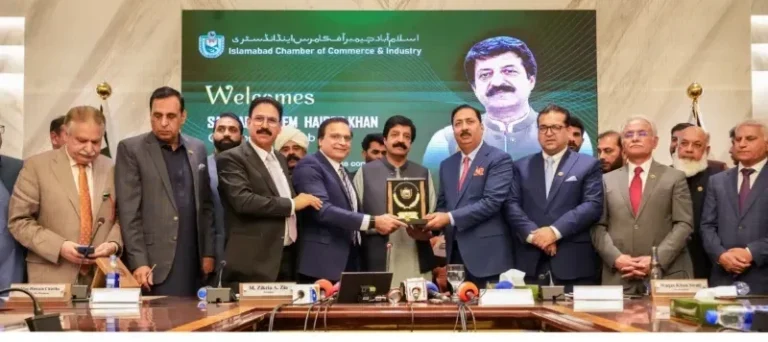
Later, FCCI President Arif Ehsan Malik accompanied by Mian Muhammad Adrees and Mian Javed Iqbal presented FCCI shield to Deputy Commissioner Muhammad Nauman Siddique in recognition of his visit.
The deputy commissioner also recorded his views for the FCCI podcast while the meeting concluded with a group photograph.
Source: APP (Associated Press of Pakistan)