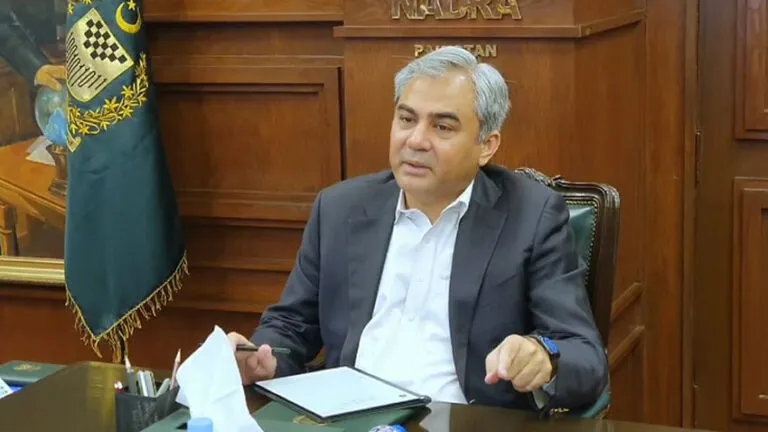
ISLAMABAD, Oct 19 (APP):Federal Interior Minister Mohsin Naqvi on Monday said Pakistan made every possible effort to reduce tensions between Iran and the United States and bring both sides to the negotiating table, stressing that dialogue, trust and continued engagement are essential for peace.
Addressing the Global Security Forum 2026 in Doha, Qatar, Naqvi thanked the Qatari state for bringing countries together to discuss peace and recognised its role in diplomacy. He said Qatar had continued engaging with different sides when others chose to take positions, adding that Pakistan had worked alongside Qatar in these efforts.
Naqvi said the conflict involving Iran and the United States in recent months had created serious risks for the Middle East and the world. Pakistan responded by pursuing peace and making efforts to prevent further escalation.
He highlighted the role of Chief of Defence Forces Field Marshal Syed Asim Munir, saying his personal efforts, relations with world leaders and continuous engagement with all sides helped open channels for dialogue.
The minister said he had also participated in the peace efforts alongside the Field Marshal. During visits to Tehran and meetings with senior Iranian officials, he witnessed the difficulties involved in the negotiations. Despite moments of tension, Pakistan continued talking, listening and working to build trust.
Naqvi said peace could not be achieved through a single meeting and required patience, trust and continuous efforts.
He recalled that Pakistan hosted the Islamabad talks in April, followed by the signing of the Islamabad Memorandum in June. Days later, Pakistan and Qatar, as the two mediating parties, met at Lake Geneva in Switzerland.
Naqvi said he witnessed an extraordinary commitment during the meeting, when the Qatari prime minister and Field Marshal Asim Munir continued their discussions for more than 16 hours without a break. He said there were no cameras or announcements, only two leaders determined to prevent the talks from failing.
He stressed that Pakistan and Qatar were not seeking credit but wanted to prevent further conflict and save innocent lives.
The minister also referred to the Makkah Joint Defence Agreement between Pakistan, Saudi Arabia and Turkey, describing it as a defence pact rather than an arrangement for war. He said lasting peace could not be achieved while neighbouring countries remained in conflict.
Speaking about terrorism, Naqvi said Pakistan had lost thousands of citizens, soldiers and police personnel and continued to fight the threat. He called for stronger cooperation, improved intelligence sharing and joint efforts, describing terrorism as a common enemy.
He added that Pakistan had also contributed to international security through decades of participation in United Nations peacekeeping missions. Pakistani military and police personnel had helped protect civilians, support local police and restore peace in conflict-affected countries.
Naqvi outlined three lessons from recent peace efforts: dialogue must never be abandoned, trust is essential for negotiations, and peace requires sincere efforts from all sides. No country, he said, could achieve regional peace alone.
He reaffirmed Pakistan’s commitment to dialogue, peace and cooperation, concluding that the country did not seek credit for stopping wars but wanted a future in which wars did not begin.
Source: APP (Associated Press of Pakistan)