By Yawar Abbas
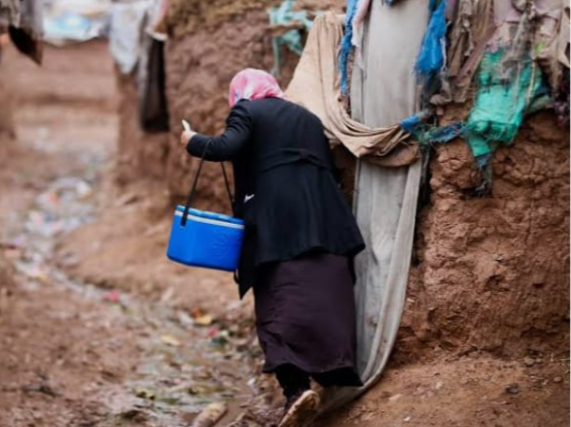
ISLAMABAD, Oct 25 (APP):On every street, snowy mountainside, remote desert and river crossing, Pakistan’s polio frontline workers carry the promise of a healthier, polio-free future, protecting children with two drops of the life-saving vaccine at a time.
Braving harsh weather, rugged terrain, difficult journeys and resistance, more than 400,000 dedicated workers continue to visit households across the country to ensure that no child is left vulnerable to poliovirus, which can cause lifelong paralysis.

Over the past three decades, the tireless efforts of these workers, backed by the Government of Pakistan and its partners, have helped reduce polio cases by 99.8 per cent, from an estimated 20,000 annually in the early 1990s to 31 cases in 2025 and now only seven cases this year so far. Their commitment remains crucial as Pakistan continues its struggle to interrupt poliovirus transmission and achieve a polio-free future.
Minister of State for Health, Malik Mukhtar Ahmad Bharath has paid tribute to Pakistan’s more than 400,000 polio frontline workers for their tireless efforts, exceptional dedication and sacrifices in protecting children against the crippling disease.
He acknowledged their commitment to reaching children in remote and hard-to-access areas, often working under challenging conditions, and reiterated the government’s commitment to supporting and safeguarding these frontline heroes as they continue their efforts to protect every child from polio.
Prime Minister’s Focal Person for Polio Eradication Ayesha Raza Farooq has also highlighted the indispensable contribution of frontline workers, acknowledging their dedication, resilience and tireless efforts to protect children across the country.

She said their unwavering commitment, even in the most challenging circumstances, was helping protect children and build a healthier future for generations to come. She emphasized the need to sustain the momentum of eradication efforts and reach every last child.
More than 60 per cent of Pakistan’s polio frontline workforce comprises women, whose contribution is particularly important in reaching households, engaging mothers and caregivers, addressing concerns about vaccination and building trust within communities.
For polio workers in Pakistan’s mountainous regions, reaching children can mean hours of trekking through snow-covered mountains, navigating dangerous paths and confronting the risks of landslides and severe weather.
“We trek through snow-covered mountains for hours, facing difficult terrain and the danger of falling snow and landslides. Despite these challenges, we remain committed to reaching every household in our assigned areas and ensuring that all children receive polio drops,” said Mahnoor, a polio worker from Khyber Pakhtunkhwa.
Mahnoor is among the frontline workers trained and mobilized by the World Health Organization (WHO), in collaboration with Pakistan’s Polio Eradication Initiative, to deliver vaccines door-to-door during vaccination campaigns.

Their mission is to protect millions of children against the crippling disease, often in areas where difficult terrain, inadequate infrastructure and long distances make access particularly challenging.
Sajida, a member of a two-person polio vaccination team in Quetta, views her work as an opportunity to serve her country and contribute to the national eradication effort.
“I am grateful to have the chance to contribute to this important cause. I am doing everything I can to help Pakistan become free of polio,” she said.
Their experiences reflect the determination of thousands of workers who continue to deliver vaccines in remote communities, ensuring that geographical barriers do not deprive children of protection.
The challenges faced by frontline workers are not limited to remote mountain settlements. In urban areas, they often navigate narrow streets, crowded neighbourhoods, apartment buildings and difficult working conditions to reach children.
Atiqa, a polio worker assigned to Gulistan Colony in Rawalpindi, spent long hours walking through narrow streets and climbing multiple flights of stairs, visiting more than 200 households to administer oral polio vaccine to eligible children.
Her work illustrates the physical demands of door-to-door vaccination campaigns, which require stamina, patience and repeated visits to ensure that every eligible child is reached.
“My message to parents across Pakistan is to make sure their children receive polio drops during every campaign. These few drops can protect them from a disease that may leave them paralysed for life,” she said.
Saima, a polio worker from Islamabad, stressed the importance of protecting children against the disease through repeated vaccination.
“Polio poses a serious threat to children because it can cause permanent paralysis. That is why we visit homes and vaccinate children, ensuring that no child is left unprotected against this preventable disease,” she said.
Such efforts demonstrate that frontline workers are not merely vaccine administrators. They are also public health advocates who help parents understand the risks of polio and the importance of repeated vaccination.
Despite their dedication, frontline workers sometimes face vaccine refusals and misinformation, which can complicate efforts to achieve comprehensive vaccination coverage.
Suraya Bibi, a polio worker at Peshawar, knows these challenges well. She covers more than 120 houses from dawn to dusk during vaccination rounds, often navigating rough terrain and damaged roads.
“Sometimes the poor infrastructure in our city makes our job very hard. Rough terrain and broken roads sometimes make it difficult to travel and reach every home,” she said.
Their experience highlights the importance of community trust in vaccination campaigns. Frontline workers must often explain the benefits of immunization, respond patiently to questions and reassure parents who may have encountered misleading information.
Suraya Bibi also promotes routine immunization against other vaccine-preventable diseases, encouraging parents to protect their children beyond supplementary polio campaigns.
“Eradicating polio is not just about polio vaccination campaigns. It is about developing an understanding among our people of the importance of disease prevention through vaccines,” she said.
Pakistan’s polio eradication efforts depend on a vast network of frontline workers who conduct household visits, identify eligible children, record vaccination activities and make repeated efforts to reach those missed during initial visits.
According to an official of National Emergency Operations Centre (NEOC), the central hub for the Pakistan Polio Eradication Initiative (PEI), the country conducted two nationwide and two sub-national polio vaccination campaigns in 2026, alongside targeted interventions in Karachi, Quetta and Peshawar. Each nationwide campaign targets approximately 45 million children under five.
Pakistan’s third sub-national campaign of 2026 is scheduled for November 2 to 8 in 97 selected districts, aiming to vaccinate more than 23.9 million children, he added.
The scale of these operations underscores the essential role of frontline workers in ensuring that vaccination reaches every community, particularly children living in underserved and high-risk areas.
Repeated doses are essential to building children’s immunity against poliovirus. Parents and caregivers have therefore an important role to ensure that every child under five receives polio drops during every campaign, regardless of previous vaccination history.
The commitment of frontline workers must be matched by sustained institutional support, adequate resources, appropriate training and measures to safeguard their well-being, Arif Sadeeq, a social sector expert, suggested.
“Their work frequently involves long hours, difficult travel and challenging interactions with families. Ensuring their safety and providing the necessary logistical support are essential to maintaining an effective vaccination network,” he said.
He said the government institutions, healthcare professionals, development partners, communities and the media also have a shared responsibility to support vaccination teams, counter misinformation and encourage parents to cooperate with immunization campaigns.
The mission of polio workers is deeply connected to the health and future of Pakistan’s children. Their determination reflects the contribution of hundreds of thousands of frontline workers who continue to overcome geographical, social and logistical barriers to deliver life-saving vaccines.
Every household reached, every child vaccinated and every family convinced brings Pakistan one step closer to interrupting poliovirus transmission and achieving a polio-free future.
Source: APP (Associated Press of Pakistan)