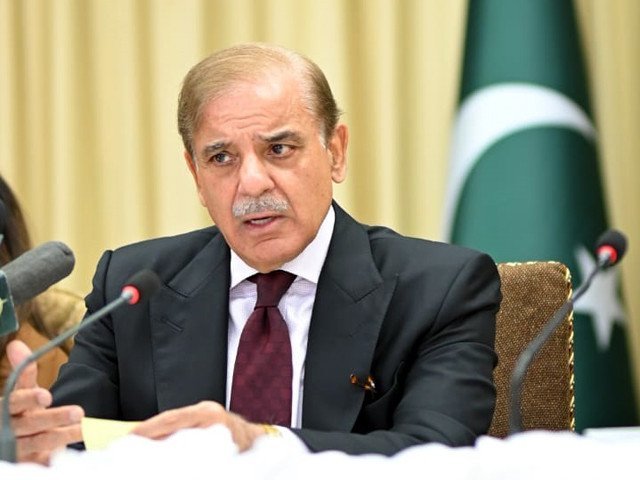
The prime minister reiterated that sustained hard work, transparency and institutional reforms were essential for ensuring long-term economic stability and prosperity.Highlighting Pakistan’s diplomatic achievements, economic reforms and the importance of national cohesion, the prime minister said collective efforts were essential to achieving sustainable socio-economic development and long-term stability.
He said Pakistan played a constructive role during the Iran-United States conflict that affected the wider region.
He credited Field Marshal Syed Asim Munir and Deputy Prime Minister and Foreign Minister Ishaq Dar for helping facilitate dialogue between Iran and the United States in Islamabad after a gap of 47 years.
He said these efforts culminated in the signing of the Islamabad Memorandum of Understanding in June this year and reaffirmed Pakistan’s commitment to promoting peace and regional stability.
Describing Iran as a neighbouring and brotherly country, the prime minister said Pakistan had simultaneously strengthened relations with the United States and Gulf nations, maintaining cordial ties with all partners.
Referring to Pakistan’s growing strategic partnerships, he said a Strategic Defense Agreement was signed with Saudi Arabia in Riyadh last year, followed by a Trilateral Defense Agreement involving Pakistan, Saudi Arabia and Turkiye this year.
He said the agreements were based on mutual trust, respect and shared interests, adding that the partnership would contribute to regional security, progress and prosperity.
The prime minister emphasized that the defense arrangements were not directed against any country and carried no aggressive intent. He termed the agreements a major diplomatic achievement that enjoyed broad public support across Pakistan.
Reflecting on national security achievements, he praised the leadership of Field Marshal Syed Asim Munir and the armed forces, saying Pakistan had effectively responded to external challenges and must now focus on converting such successes into economic gains.
During a very brief encounter, the prime minister said Pakistan delivered India a bloody nose under the able leadership of the field marshal and their brave and courageous armed forces.
Responding to questions from workshop participants, the prime minister described rapid population growth as a “ticking time bomb” that could seriously affect economic development if not addressed through decisive measures.
He also criticized decades of subsidies extended to industries without generating the desired economic outcomes and identified tax evasion as a major challenge.
He noted that salaried individuals continued to bear a disproportionately large tax burden compared to other sectors.
The prime minister said state-owned enterprises had accumulated losses amounting to trillions of rupees over the years, forcing governments to borrow heavily to sustain them.
In this regard, he defended the closure of the Pakistan Public Works Department (PWD) and Utility Stores Corporation, saying both institutions had become centers of recurring corruption and their abolition had saved significant public funds.
He said financial assistance under the Benazir Income Support Programme (BISP) was now being delivered transparently through digital wallets using verified beneficiary data. He noted that Rs27 billion had been transferred to deserving families during the current year.
The prime minister also defended the privatization of Pakistan International Airlines (PIA), stating that the national carrier had been incurring annual losses of around Rs300 billion.
Highlighting governance reforms, he said illegal gold mining activities in Khyber Pakhtunkhwa had been halted and stressed the importance of establishing a regulated and transparent mining sector.
These measures had been introduced to encourage value addition in Balochistan’s mineral sector instead of exporting raw materials, he added.
Referring to government relief measures introduced after the Gulf conflict, the prime minister said a fuel subsidy mechanism had been established under which Rs28 billion was initially allocated, while total subsidy disbursements had so far reached Rs50 billion.
He stressed that ambitious economic targets could not be achieved through isolated efforts and called for national unity, consensus and cooperation among all stakeholders.
The prime minister said that, for the first time, the government, with the support of both political and military leadership, had undertaken difficult but necessary reforms to stabilize the economy, despite their short-term impact on lower-income groups.
He emphasized the need for further macroeconomic reforms to permanently overcome the country’s recurring cycle of economic booms and crises.
Responding to another question, he announced that a network of Daanish Schools was being established in Azad Jammu and Kashmir for the first time.
He said state-of-the-art institutions equipped with information technology and artificial intelligence facilities were nearing completion in Bhimber and Bagh, where admissions would be granted purely on merit to talented students.
The prime minister reiterated that sustained reforms, prudent economic management, investment in human capital and national cohesion were vital for securing a prosperous future for Pakistan.
Source: APP (Associated Press of Pakistan)