By Abdul Samad Tariq
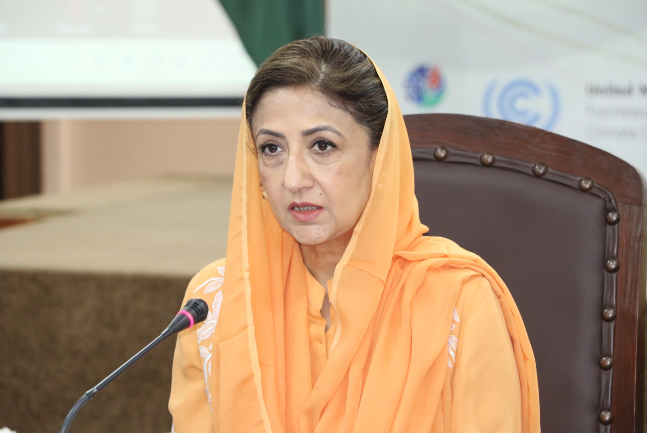
ISLAMABAD, Oct 21 (APP):State Minister for Climate Change Dr Shezra Mansab Ali Khan Kharal said on Wednesday that Pakistan will need an estimated $565 billion in investment through 2035 to meet its climate commitments, while limited fiscal space and gaps in international climate finance pose major challenges to implementing its targets.
Addressing a roundtable “Pre-Cop31 Multistake holder Consultation” ahead of Pakistan’s participation in the 31st Conference of the Parties (COP31) in Antalya, Türkiye, the state minister said the country needed a well-defined negotiating position on adaptation finance, loss and damage, and the climate risks faced by its mountainous regions.
Pakistan’s third Nationally Determined Contribution (NDC), submitted in September last year, commits the country to reducing emissions by 50 per cent against projected levels by 2035, comprising a 17pc unconditional reduction and a further 33pc conditional on international support, she said.
The minister pointed out that these commitments came at a time when more than 60pc of the country’s revenues were being spent on debt servicing, leaving limited fiscal space to finance climate action.

“The gap between those two things is what our negotiators are set to close,” she said, referring to Pakistan’s climate commitments and its financial constraints.
With the negotiating brief for COP31 being finalised across several ministries, Dr Kharal acknowledged the absence of a formal mechanism through which provincial institutions, universities, youth organisations and affected communities could contribute evidence and recommendations to the process.
She said the conference offered an opportunity to develop an evidence-based position before the negotiating brief was finalised, rather than issue recommendations after the delegation returned.
On adaptation finance, the minister highlighted the uncertainty surrounding a commitment made at a previous climate conference to triple adaptation finance by 2035, saying the final text did not specify the baseline against which the increase would be measured.
She cited adaptation finance of $26 billion in 2023 against a commitment of $40bn by the current year, while the assessed annual requirement stood at $310bn.
The baseline adopted for the proposed increase would determine the extent to which the commitment translated into meaningful financial support for vulnerable countries such as Pakistan, she said.
The minister also drew attention to the disparity between the resources available through the Fund for responding to Loss and Damage and the financial requirements of countries seeking assistance.
According to her, the fund had received 176 eligible proposals from 119 countries seeking $2.8bn, while $342 million was available for its pilot phase.
Pakistan had submitted three requests totalling $58m for agricultural recovery, climate-resilient health systems in Balochistan and the rehabilitation of flood-damaged fisheries in Khyber Pakhtunkhwa, she said.
No allocation had been made to the country’s requests, while the fund’s first allocation decisions were expected in December, after COP31.
Dr Kharal said half of the fund’s resources had been reserved for least developed countries and small island developing states, leaving Pakistan to compete for the remaining share with other developing countries outside those categories.
She urged participants to develop a reasoned position on the issue for the delegation to consider during negotiations.
The minister identified mountain-related climate risks as another priority, noting that accelerated glacial melt could reduce flows in the Indus River system by 20 to 30pc by 2050, according to Pakistan’s NDC projections.
Gilgit-Baltistan and Chitral faced risks that were not adequately reflected in the existing categories used under the international climate convention, she said.
A glacial lake outburst flood, she observed, was a sudden disaster triggered by a gradual process, creating difficulties for classification and access to climate financing.
Referring to a dialogue on mountains and climate change held in Bonn in June, she stressed the need to ensure that the particular vulnerabilities of mountain communities were reflected in international climate decisions.
Dr Kharal also called for specific proposals to increase youth representation in Pakistan’s COP delegation, saying general commitments to inclusion would have little practical effect without clear provisions on the number of young delegates, their nomination and their status.
In a country where the majority of the population was under 30, she said, the composition of official delegations did not adequately reflect the country’s demographic profile.
She urged participants to formulate concrete recommendations rather than broad appeals for youth participation.
Clarifying the status of the conference’s outcome, the minister said the proposed text would belong to the participants and could not be guaranteed government adoption.
However, she assured them that the document would be read by the government and conveyed to the Ministry of Foreign Affairs, adding that the issues raised were still under consideration as the negotiating brief remained open.
Emphasising the importance of precise language in climate negotiations, Dr Kharal said the wording of international decisions could determine whether commitments translated into actual financial support.
She said distinctions between terms relating to financial provision and mobilisation, as well as the explicit recognition of particular climate hazards, could have direct consequences for funding and implementation.
The minister urged participants to use the opportunity to develop a jointly owned, evidence-based position that could inform Pakistan’s negotiating priorities at COP31.
Source: APP (Associated Press of Pakistan)