Sunday, 25 October 2026
Breaking
Pregabalin sale without prescription banned in Islamabad Action planned against unauthorized ultrasound reporting Coordination with federation vital to resolving KP’s challenges: Governor Labourers use heavy machinery to dig trenches to lay a sewerage pipeline along LMO Road near Rajapur as part of ongoing development work Minister calls recent wheat price fixation will support, encourage farmers A carpenter busy in carving different designs on hardboard sheet at his workplace IESCO notifies power suspension programme A vendor selling colorful helium-filled different cartoon characters at a roadside stall in F-11 Markaz At UN, Pakistan warns of military AI risks without human control A view of Shahi Mosque (Sher Shah Suri Mosque) in Rohtas Fort. Rohtas Fort is a 16th-century fortress near Dina and Jhelum in Punjab, Pakistan. It was built in 1541 by Sher Shah Suri as a massive military stronghold and was designated a UNESCO World Heritage Site in 1997. Rohtas Fort is situated on a hill in the Tilla Jogian Range, overlooking a gorge where the Kahān River meets a seasonal stream called Parnal Khas. The fort is positioned 91.5 metres (300 ft) above its surroundings. It is 819 metres (2,687 ft) above sea level and covers an area of 70 hectares (170 acres). It is approximately 103 kilometers (64 miles) from Islamabad and is renowned for its historical significance and architectural marvels. Visitors can enjoy a guided tour that includes exploring the fort’s monumental gates, palaces, barracks, and mosques Rohtas Fort is a 16th-century fortress near Dina and Jhelum in Punjab, Pakistan. It was built in 1541 by Sher Shah Suri as a massive military stronghold and was designated a UNESCO World Heritage Site in 1997. Rohtas Fort is situated on a hill in the Tilla Jogian Range, overlooking a gorge where the Kahān River meets a seasonal stream called Parnal Khas. The fort is positioned 91.5 metres (300 ft) above its surroundings. It is 819 metres (2,687 ft) above sea level and covers an area of 70 hectares (170 acres). It is approximately 103 kilometers (64 miles) from Islamabad and is renowned for its historical significance and architectural marvels. Visitors can enjoy a guided tour that includes exploring the fort’s monumental gates, palaces, barracks, and mosques Rohtas Fort is a 16th-century fortress near Dina and Jhelum in Punjab, Pakistan. It was built in 1541 by Sher Shah Suri as a massive military stronghold and was designated a UNESCO World Heritage Site in 1997. Rohtas Fort is situated on a hill in the Tilla Jogian Range, overlooking a gorge where the Kahān River meets a seasonal stream called Parnal Khas. The fort is positioned 91.5 metres (300 ft) above its surroundings. It is 819 metres (2,687 ft) above sea level and covers an area of 70 hectares (170 acres). It is approximately 103 kilometers (64 miles) from Islamabad and is renowned for its historical significance and architectural marvels. Visitors can enjoy a guided tour that includes exploring the fort’s monumental gates, palaces, barracks, and mosques Pregabalin sale without prescription banned in Islamabad Action planned against unauthorized ultrasound reporting Coordination with federation vital to resolving KP’s challenges: Governor Labourers use heavy machinery to dig trenches to lay a sewerage pipeline along LMO Road near Rajapur as part of ongoing development work Minister calls recent wheat price fixation will support, encourage farmers A carpenter busy in carving different designs on hardboard sheet at his workplace IESCO notifies power suspension programme A vendor selling colorful helium-filled different cartoon characters at a roadside stall in F-11 Markaz At UN, Pakistan warns of military AI risks without human control A view of Shahi Mosque (Sher Shah Suri Mosque) in Rohtas Fort. Rohtas Fort is a 16th-century fortress near Dina and Jhelum in Punjab, Pakistan. It was built in 1541 by Sher Shah Suri as a massive military stronghold and was designated a UNESCO World Heritage Site in 1997. Rohtas Fort is situated on a hill in the Tilla Jogian Range, overlooking a gorge where the Kahān River meets a seasonal stream called Parnal Khas. The fort is positioned 91.5 metres (300 ft) above its surroundings. It is 819 metres (2,687 ft) above sea level and covers an area of 70 hectares (170 acres). It is approximately 103 kilometers (64 miles) from Islamabad and is renowned for its historical significance and architectural marvels. Visitors can enjoy a guided tour that includes exploring the fort’s monumental gates, palaces, barracks, and mosques Rohtas Fort is a 16th-century fortress near Dina and Jhelum in Punjab, Pakistan. It was built in 1541 by Sher Shah Suri as a massive military stronghold and was designated a UNESCO World Heritage Site in 1997. Rohtas Fort is situated on a hill in the Tilla Jogian Range, overlooking a gorge where the Kahān River meets a seasonal stream called Parnal Khas. The fort is positioned 91.5 metres (300 ft) above its surroundings. It is 819 metres (2,687 ft) above sea level and covers an area of 70 hectares (170 acres). It is approximately 103 kilometers (64 miles) from Islamabad and is renowned for its historical significance and architectural marvels. Visitors can enjoy a guided tour that includes exploring the fort’s monumental gates, palaces, barracks, and mosques Rohtas Fort is a 16th-century fortress near Dina and Jhelum in Punjab, Pakistan. It was built in 1541 by Sher Shah Suri as a massive military stronghold and was designated a UNESCO World Heritage Site in 1997. Rohtas Fort is situated on a hill in the Tilla Jogian Range, overlooking a gorge where the Kahān River meets a seasonal stream called Parnal Khas. The fort is positioned 91.5 metres (300 ft) above its surroundings. It is 819 metres (2,687 ft) above sea level and covers an area of 70 hectares (170 acres). It is approximately 103 kilometers (64 miles) from Islamabad and is renowned for its historical significance and architectural marvels. Visitors can enjoy a guided tour that includes exploring the fort’s monumental gates, palaces, barracks, and mosques
National

PM launches Chromebook Scheme for 500,000 students, stresses youth empowerment

PM launches Chromebook Scheme for 500,000 students, stresses youth empowerment
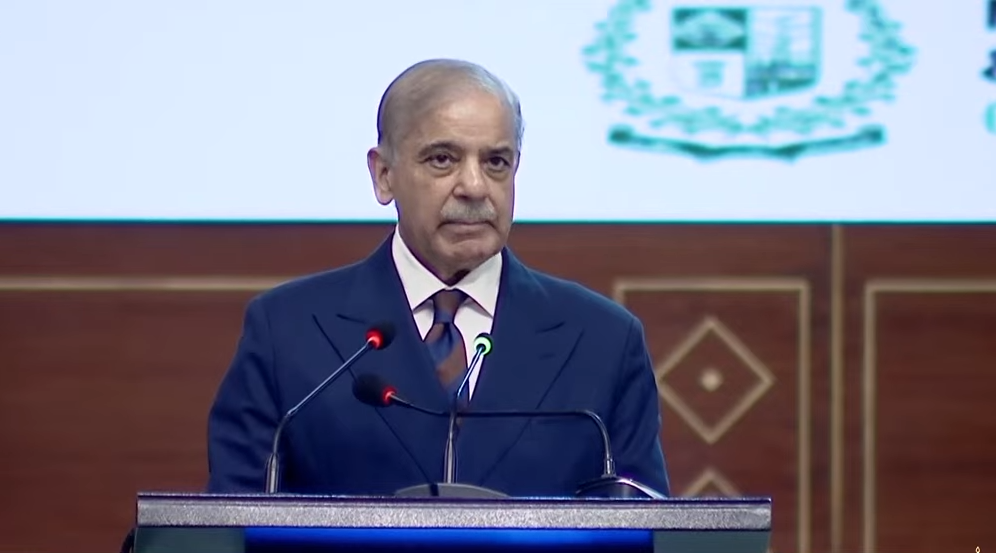
ISLAMABAD, Oct 25 (APP): Prime Minister Muhammad Shehbaz Sharif, Sunday, formally launched a nationwide initiative to distribute 500,000 Chromebooks, equipped with MiFi internet connectivity, to deserving students and high achievers based strictly on merit.
Addressing the launching ceremony, the prime minister emphasized that equipping the country’s youth with modern education and technology is a core government responsibility and the key to building a prosperous Pakistan.
Highlighting the initiative’s inclusivity, he noted that laptops are being provided to students from diverse educational backgrounds—including mainstream schools and madaris—based solely on talent and hard work, helping them access e-libraries and pursue quality education.
Recalling past educational initiatives, the prime minister added that previous PML-N government under Nawaz Sharif had successfully distributed 600,000 laptops nationwide over a decade, maintaining a strict commitment to merit-based distribution.
The prime minister underscored that poverty should not hamper country’s youth from getting higher education and announced that these chrome books, would be distributed among the deserving students within two years.
He stressed that empowering the nation’s youth with modern tools is vital to helping them compete globally, while expressing gratitude to Tokyo Technology and the Care Foundation for partnering in the Chromebook initiative.
During his address, the prime minister highlighted the expansion of educational infrastructure, noting the recent inauguration of a Daanish School in Islamabad alongside 27 other campuses currently under construction nationwide, designed to offer state-of-the-art facilities and curricula.
To underscore the merit-based nature of the programme, the prime minister shared inspiring stories of top achievers overcoming adversity, including Syed Shams Raza—a student living in an orphanage whose father was a martyr—and Alma Mahak, a dedicated student from a madrassah.
He recalled that previous laptop schemes had also successfully reached prominent religious seminaries.
Expressing confidence in the initiative’s broad impact, the prime minister noted that the scheme’s internet connectivity features will extend benefits to family members, ultimately reaching an estimated 2.5 million people.
He also recalled how laptops distributed during the COVID-19 pandemic served as a crucial lifeline for students to continue their education and earn a livelihood.
The event was attended by ministers, parliamentarians, speaker Punjab Assembly, educationists, vice chancellors, ambassadors and foreign guests.
Addressing the Chromebook distribution ceremony, Federal Minister for Federal Education Khalid Maqbool Siddiqui emphasized that the government is striving to elevate Pakistan’s global standing by adapting to evolving educational trends.
He noted that transforming the country’s 150 million youth into a productive national asset is crucial to ensuring the youth bulge drives progress rather than becoming a challenge.
Tokyo Technology Care Foundation (TTC) Chairman Rashid Minhas spoke about the partnership, stating that the memorandum signed with the government aims to empower students to become creators in the digital world and spur a national digital revolution.
Meanwhile, PM’s Youth Programme Chairman Rana Mashhood Ahmad Khan praised the prime minister’s vision for recognizing young talent with the support of the overseas diaspora.
He reiterated that the initiative, which includes MiFi connectivity for an estimated 2.5 million family members, marks a major milestone in modernizing education.
Mashhood also noted that renewed international confidence in Pakistan presents a vital window of opportunity for the youth to excel in global innovation and technology.
The prime minister also distributed Chromebooks among the deserving students, followed by remarks from top achievers Syed Shams Raza and Alma Mahak Sabir, who expressed gratitude for the recognition of their hard work.

Source: APP (Associated Press of Pakistan)