
ISLAMABAD, Nov 20 (APP):Federal Minister for Planning, Development and Special Initiatives Professor Ahsan Iqbal on Friday announced the establishment of 10 National Catapults to bridge the gap between research and industry and help transform Pakistani research into commercially viable technologies and products.
The initiative would be launched under the Science, Technology and Engineering for Development (STED), a flagship initiative of URAAN Pakistan, to provide universities, start-ups and manufacturers access to shared testing facilities, prototyping infrastructure and pilot production lines.
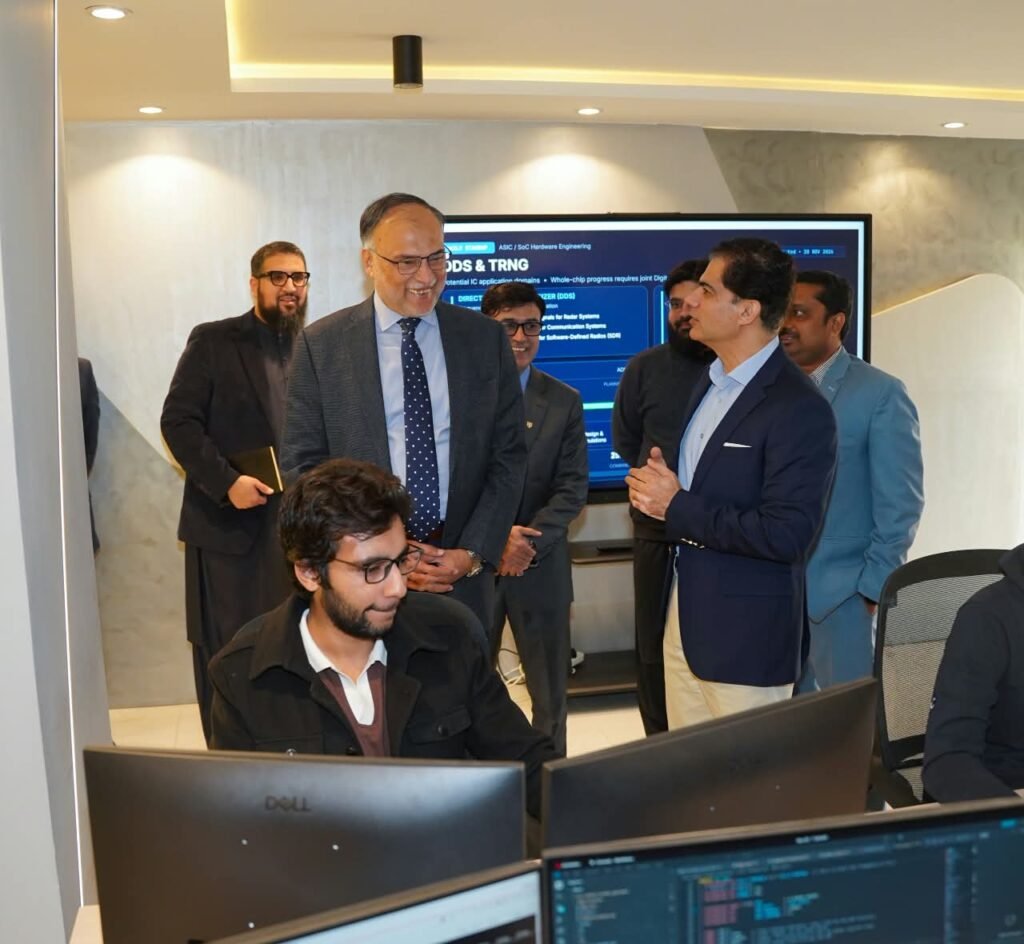
The minister made the announcement following his visit to IRADA, which would become the first state-owned enterprise formally designated to lead a National Catapult. It would spearhead the Semiconductor and Advanced Electronics Catapult, marking the first step towards establishing the national network.
Speaking on the initiative, Ahsan Iqbal said the National Catapults would provide a platform for universities and industries to work together in developing, testing and refining technologies before their commercial production.
He said the initiative would enable university researchers to refine prototypes with industry engineers, help manufacturers test new processes before investing in production facilities and allow investors to assess technologies under real operating conditions.
The minister said the initiative was central to URAAN Pakistan’s vision of expanding exports through the development and manufacturing of higher-value products.
He said the Catapults would help Pakistani firms meet international standards, develop competitive local alternatives to imported technologies and create skilled employment opportunities for young engineers, scientists and technicians.
He said the network’s performance would be measured by the number of technologies reaching commercial production, Pakistani firms gaining access to new markets and skilled jobs created.
The 10 proposed National Catapults would cover Semiconductor and Advanced Electronics; High-Value Manufacturing and Industry 4.0; Digital Economy and Artificial Intelligence; AgriTech and Food Technology; Health Technology and MedTech; Clean Energy and Climate Technology; Mines, Minerals and Materials; Defence Technology and Dual-Use; Space Technology; and Chemicals and Composites.
The Catapults would focus on Technology Readiness Levels (TRLs) 4–7, covering the stages from laboratory validation to prototype demonstration in operational settings.
They would also facilitate universities in commercialising intellectual property, identifying emerging technologies and future workforce requirements, while helping businesses validate technologies before committing investments to full-scale production.
The network would further seek to attract foreign direct investment and risk capital and contribute to developing regulations, standards and certification frameworks.
The initiative draws on international models, including the United Kingdom’s Catapult Network, Germany’s Fraunhofer Institutes, Manufacturing USA and Singapore’s A*STAR, bringing together universities, research institutions, industry, entrepreneurs, investors and government agencies to accelerate the commercialisation of locally developed technologies.
Source: APP (Associated Press of Pakistan)