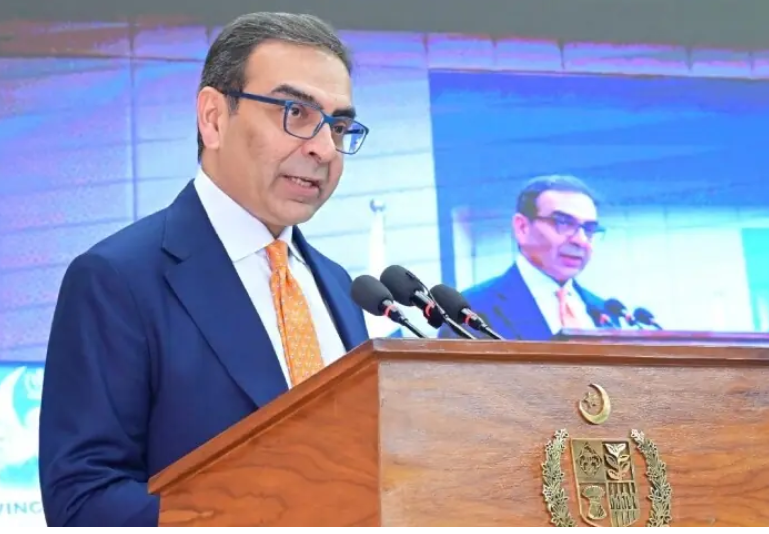
ISLAMABAD, Oct 22 (APP):Adviser to the Prime Minister on Privatization Muhammad Ali on Thursday stressed the need for sustainable economic growth through structural reforms, private-sector investment and export-led development, identifying agriculture, textiles and information technology (IT) as key sectors that could help Pakistan strengthen its economy.
Addressing the CEO Summit, he said Pakistan needed to learn from countries such as China, South Korea, Vietnam and Bangladesh, which had built their economies by focusing on existing strengths and developing them consistently over time.
He said Pakistan had faced severe economic challenges during 2022 and 2023, including fiscal constraints, low productivity, production curtailments, high inflation and elevated interest rates, which had slowed economic activity.
“We cannot go through that sort of test again. So we need to do something to avoid it in the future,” he said, emphasizing the importance of perseverance, patience, focus and coordinated policymaking in navigating economic difficulties.
The adviser said the key question was how to build an economy resilient enough to withstand future challenges while maintaining a higher and sustainable growth trajectory.
Citing international examples, he said China had initially built on its agricultural strengths after launching economic reforms in 1978, South Korea had developed industries such as textiles and plywood during the 1960s, while Vietnam had transformed itself from a rice importer into a major exporter.
Bangladesh, he added, had also developed its garment industry by capitalizing on its existing strengths.
“These countries did not try to do everything at once. They started from what they could already do well and built upon it,” he said, adding that sustained efforts and policy continuity had enabled them to achieve long-term economic progress.
Presenting a framework called “TRUST” for Pakistan’s economic growth, Muhammad Ali said it focused on targeting sectors where the country had competitive strengths, implementing sustainable reforms, unlocking private capital, scaling up exports and developing talent.
He said sectoral priorities should be determined through five key considerations: proven strength, the ability to deliver with existing institutions and infrastructure, global demand, employment generation at scale and foreign-exchange earnings.
Applying these criteria, he identified agriculture, textiles and IT and digital services as sectors offering opportunities for employment creation, higher economic output and export growth.
Pakistan’s agricultural sector, he said, needed a new wave of development focused on improving crop yields, storage facilities, processing and value-added exports, building on the gains of the Green Revolution of the 1960s.
In textiles and apparel, he said the country needed to move beyond yarn and fabric production towards finished garments, brands and technical fabrics to increase value addition and competitiveness in international markets.
He also highlighted the potential of IT and digital services, noting that Pakistani youth were already serving international clients through freelance work. Better organization of the sector and stronger digital skills, he said, could help the country capitalize on growing global demand.
Turning to implementation, Muhammad Ali said sustainable reforms were essential to translate these sectoral priorities into economic gains, adding that Pakistan had introduced various reform plans in the past but many had been reversed or faced obstacles.
He identified energy, taxation and state-owned enterprises (SOEs) as three major areas requiring reform.
On energy, he said high power costs undermined the competitiveness of domestic industries and stressed the need for affordable, reliable and sustainable energy supplies.
He called for transferring energy-sector management and decision-making to the private sector to promote competition, improve efficiency, attract investment and reduce costs.
The Adviser emphasized the need to document the economy to broaden the tax base and distribute the tax burden more fairly.
He said too few taxpayers were currently carrying a disproportionate share of the burden, adding that greater documentation would provide a clearer picture of economic activity and help increase tax revenues without relying on the same narrow segment of taxpayers.
The adviser also identified reform of state-owned enterprises as a key component of the government’s economic reform agenda.
He said Pakistan needed to pursue a focused and consistent strategy that built on its competitive strengths, improved productivity, encouraged private investment and expanded exports to achieve sustainable economic development.
Earlier, Muhammad Ali thanked the CEO Club team for bringing together representatives of businesses, the investor community, government and academia, saying such forums provided opportunities for meaningful discussion on the country’s economic challenges and growth prospects.
Source: APP (Associated Press of Pakistan)