Sunday, 25 October 2026
Breaking
Pregabalin sale without prescription banned in Islamabad Action planned against unauthorized ultrasound reporting Coordination with federation vital to resolving KP’s challenges: Governor Labourers use heavy machinery to dig trenches to lay a sewerage pipeline along LMO Road near Rajapur as part of ongoing development work Minister calls recent wheat price fixation will support, encourage farmers A carpenter busy in carving different designs on hardboard sheet at his workplace IESCO notifies power suspension programme A vendor selling colorful helium-filled different cartoon characters at a roadside stall in F-11 Markaz At UN, Pakistan warns of military AI risks without human control A view of Shahi Mosque (Sher Shah Suri Mosque) in Rohtas Fort. Rohtas Fort is a 16th-century fortress near Dina and Jhelum in Punjab, Pakistan. It was built in 1541 by Sher Shah Suri as a massive military stronghold and was designated a UNESCO World Heritage Site in 1997. Rohtas Fort is situated on a hill in the Tilla Jogian Range, overlooking a gorge where the Kahān River meets a seasonal stream called Parnal Khas. The fort is positioned 91.5 metres (300 ft) above its surroundings. It is 819 metres (2,687 ft) above sea level and covers an area of 70 hectares (170 acres). It is approximately 103 kilometers (64 miles) from Islamabad and is renowned for its historical significance and architectural marvels. Visitors can enjoy a guided tour that includes exploring the fort’s monumental gates, palaces, barracks, and mosques Rohtas Fort is a 16th-century fortress near Dina and Jhelum in Punjab, Pakistan. It was built in 1541 by Sher Shah Suri as a massive military stronghold and was designated a UNESCO World Heritage Site in 1997. Rohtas Fort is situated on a hill in the Tilla Jogian Range, overlooking a gorge where the Kahān River meets a seasonal stream called Parnal Khas. The fort is positioned 91.5 metres (300 ft) above its surroundings. It is 819 metres (2,687 ft) above sea level and covers an area of 70 hectares (170 acres). It is approximately 103 kilometers (64 miles) from Islamabad and is renowned for its historical significance and architectural marvels. Visitors can enjoy a guided tour that includes exploring the fort’s monumental gates, palaces, barracks, and mosques Rohtas Fort is a 16th-century fortress near Dina and Jhelum in Punjab, Pakistan. It was built in 1541 by Sher Shah Suri as a massive military stronghold and was designated a UNESCO World Heritage Site in 1997. Rohtas Fort is situated on a hill in the Tilla Jogian Range, overlooking a gorge where the Kahān River meets a seasonal stream called Parnal Khas. The fort is positioned 91.5 metres (300 ft) above its surroundings. It is 819 metres (2,687 ft) above sea level and covers an area of 70 hectares (170 acres). It is approximately 103 kilometers (64 miles) from Islamabad and is renowned for its historical significance and architectural marvels. Visitors can enjoy a guided tour that includes exploring the fort’s monumental gates, palaces, barracks, and mosques Pregabalin sale without prescription banned in Islamabad Action planned against unauthorized ultrasound reporting Coordination with federation vital to resolving KP’s challenges: Governor Labourers use heavy machinery to dig trenches to lay a sewerage pipeline along LMO Road near Rajapur as part of ongoing development work Minister calls recent wheat price fixation will support, encourage farmers A carpenter busy in carving different designs on hardboard sheet at his workplace IESCO notifies power suspension programme A vendor selling colorful helium-filled different cartoon characters at a roadside stall in F-11 Markaz At UN, Pakistan warns of military AI risks without human control A view of Shahi Mosque (Sher Shah Suri Mosque) in Rohtas Fort. Rohtas Fort is a 16th-century fortress near Dina and Jhelum in Punjab, Pakistan. It was built in 1541 by Sher Shah Suri as a massive military stronghold and was designated a UNESCO World Heritage Site in 1997. Rohtas Fort is situated on a hill in the Tilla Jogian Range, overlooking a gorge where the Kahān River meets a seasonal stream called Parnal Khas. The fort is positioned 91.5 metres (300 ft) above its surroundings. It is 819 metres (2,687 ft) above sea level and covers an area of 70 hectares (170 acres). It is approximately 103 kilometers (64 miles) from Islamabad and is renowned for its historical significance and architectural marvels. Visitors can enjoy a guided tour that includes exploring the fort’s monumental gates, palaces, barracks, and mosques Rohtas Fort is a 16th-century fortress near Dina and Jhelum in Punjab, Pakistan. It was built in 1541 by Sher Shah Suri as a massive military stronghold and was designated a UNESCO World Heritage Site in 1997. Rohtas Fort is situated on a hill in the Tilla Jogian Range, overlooking a gorge where the Kahān River meets a seasonal stream called Parnal Khas. The fort is positioned 91.5 metres (300 ft) above its surroundings. It is 819 metres (2,687 ft) above sea level and covers an area of 70 hectares (170 acres). It is approximately 103 kilometers (64 miles) from Islamabad and is renowned for its historical significance and architectural marvels. Visitors can enjoy a guided tour that includes exploring the fort’s monumental gates, palaces, barracks, and mosques Rohtas Fort is a 16th-century fortress near Dina and Jhelum in Punjab, Pakistan. It was built in 1541 by Sher Shah Suri as a massive military stronghold and was designated a UNESCO World Heritage Site in 1997. Rohtas Fort is situated on a hill in the Tilla Jogian Range, overlooking a gorge where the Kahān River meets a seasonal stream called Parnal Khas. The fort is positioned 91.5 metres (300 ft) above its surroundings. It is 819 metres (2,687 ft) above sea level and covers an area of 70 hectares (170 acres). It is approximately 103 kilometers (64 miles) from Islamabad and is renowned for its historical significance and architectural marvels. Visitors can enjoy a guided tour that includes exploring the fort’s monumental gates, palaces, barracks, and mosques
Business

Pakistan, Qatar explore new avenues for trade, investment cooperation

Pakistan, Qatar explore new avenues for trade, investment cooperation
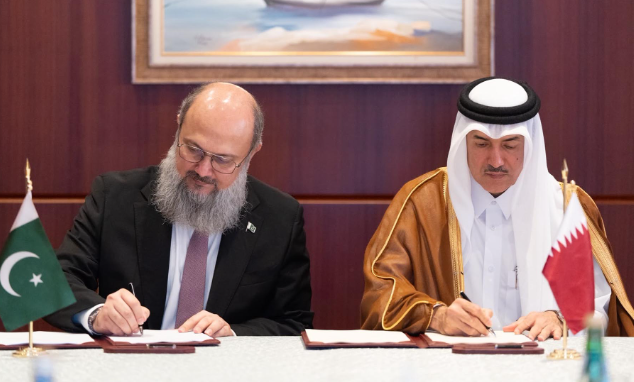
ISLAMABAD, Oct 25 (APP):Federal Minister for Commerce Jam Kamal Khan and Qatar’s Minister of State for Foreign Trade Affairs Dr. Ahmad bin Mohammed Al-Sayed co-chaired the second meeting of the Pakistan–Qatar Joint Task Force (JTF) on Trade and Investment in Doha, and reviewed progress on bilateral economic cooperation and explore new opportunities for trade, investment and industrial partnerships.
Representatives of relevant Pakistani ministries participated virtually, while the Special Investment Facilitation Council (SIFC), serving as the Secretariat of the Joint Task Force, coordinated the proceedings from Pakistan, said a news release issued here on Sunday.
Both sides reviewed progress since the inaugural meeting in April 2026 and discussed measures to strengthen bilateral trade, facilitate investment and advance cooperation across priority economic sectors.
During the meeting, Pakistan emphasized the importance of the early signing of the Pakistan–Gulf Cooperation Council (GCC) Free Trade Agreement and sought Qatar’s continued support in expediting the remaining formalities.
Pakistan informed the meeting that it had already completed its domestic approval process and forwarded the approved agreement text to the GCC Secretariat on December 31, 2025.
The Pakistani side also raised the issue of restrictions on exports of bone-in meat to Qatar and requested their early resolution, highlighting that a comprehensive technical dossier addressing animal health and food safety requirements had already been shared with the relevant Qatari authorities.
In the agriculture and food security sector, Pakistan highlighted the proposed Memorandum of Understanding between the Trading Corporation of Pakistan (TCP) and Qatar’s Hassad Food for the supply of Pakistani rice under a government-to-government arrangement. The proposed agreement has been submitted to the Federal Cabinet for approval.
Pakistan invited Qatari investment in modern agriculture, grain storage facilities, silos, cold storage, integrated cold-chain infrastructure and advanced farming technologies. Opportunities for developing sustainable food supply arrangements to strengthen food security in both countries were also discussed.
Highlighting Pakistan’s industrial potential, the Pakistani side presented investment opportunities in the automobile sector, particularly New Energy Vehicles (NEVs) and electric vehicles under the country’s new EV policy framework. Possibilities for joint manufacturing, technology transfer and industrial partnerships were also highlighted.
Pakistan further invited Qatari investment in information technology and digital infrastructure, highlighting its growing IT exports and opportunities for technology partnerships and expansion of digital services.
In the maritime sector, Pakistan identified opportunities for cooperation in shipping and maritime transport, particularly in securing oil tankers, LNG carriers and container vessels to strengthen energy security and international trade connectivity.
The proposed new Karachi–Hyderabad Motorway was also presented as a potential investment opportunity for Qatar. The project would improve connectivity between Pakistani seaports and the national road network while facilitating regional transit trade, particularly with Central Asian countries.
The Qatari side emphasized enhanced cooperation in civil aviation and air traffic between the two countries. Pakistan welcomed the proposal and informed the meeting that aviation-related matters would also be addressed through the Technical Working Group on Logistics and Communications.
The Pakistani side also presented the concept of an Investment Fund, highlighting opportunities for Qatari participation in infrastructure, agriculture, industrial development, information technology and other priority sectors.
During the discussions, Pakistan stressed the importance of early operationalization of the eleven Technical Working Groups identified during the first Joint Task Force meeting. These groups cover priority sectors including logistics, aviation, advanced manufacturing, mining and minerals, agriculture, tourism, financial technology, healthcare, education, industrial development, information technology and startups.
Pakistan informed the meeting that it had already shared the composition of the eleven working groups and requested Qatar to communicate its corresponding nominations at the earliest to enable the groups to commence their work.
The Pakistani side further emphasized that the working groups should identify concrete trade and investment opportunities, address outstanding issues and prepare sector-wise progress reports and recommendations ahead of the Third Meeting of the Joint Task Force, to be hosted by Pakistan.
At the conclusion of the meeting, Federal Minister Jam Kamal Khan and H.E. Dr. Ahmad bin Mohammed Al-Sayed formally signed the Minutes of the First Meeting of the Pakistan–Qatar Joint Task Force on Trade and Investment.
Both sides reaffirmed their commitment to strengthening bilateral economic cooperation through sustained engagement, improved trade facilitation, enhanced investment partnerships and effective follow-up under the Joint Task Force framework.
Separately, Federal Minister for Commerce Jam Kamal Khan held a bilateral meeting with Ms. Nan Li Collins, Head of the World Investment Forum, in Doha, where both sides exchanged views on the ongoing regional situation and the challenges facing the global economic landscape.
During the meeting, discussions focused on Pakistan’s constructive role in promoting regional cooperation and the importance of strengthening regional economic integration in the face of emerging global challenges.
Both sides also exchanged views on the need for enhanced regional connectivity, closer economic cooperation and coordinated efforts to address shared challenges and promote greater regional integration.

Source: APP (Associated Press of Pakistan)