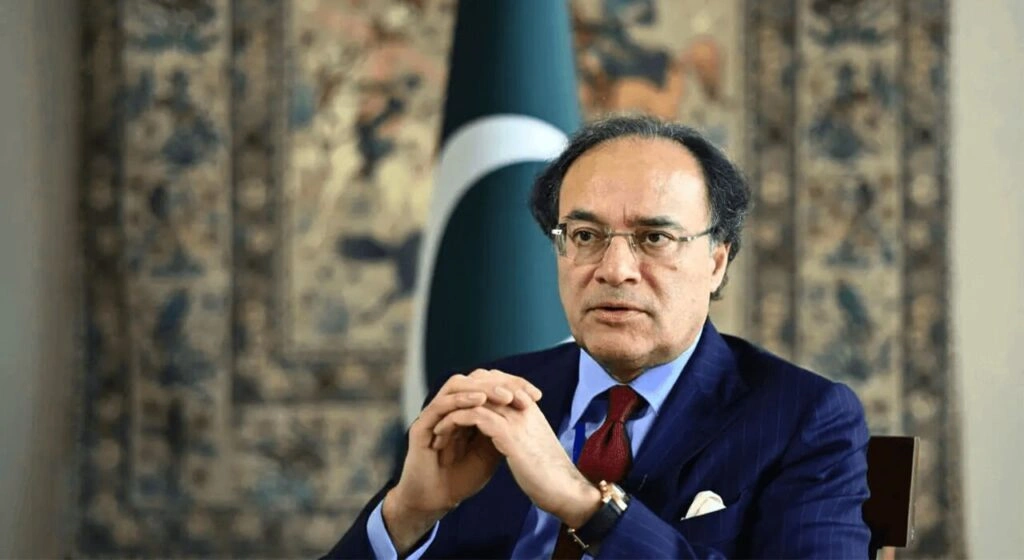
ISLAMABAD, Oct 20 (APP):Minister for Finance and Revenue Senator Muhammad Aurangzeb on Tuesday said Pakistan’s twin deficit had declined from a cumulative 12.5 percent of Gross Domestic Product (GDP) to 2.6 percent, reflecting progress in macroeconomic stabilization and fiscal consolidation.
Addressing a two-day high-level workshop on “Reforms for a Modern and Growth-Friendly Tax System in Pakistan”, the minister said that the country had achieved a 22-year low fiscal deficit in the last fiscal year and recorded primary surpluses for three consecutive years.
The event was organized by the Ministry of Finance and the International Monetary Fund (IMF), which bring together senior government officials, representatives of the IMF and World Bank, international tax experts, academics and private-sector leaders to discuss priorities for modernizing Pakistan’s tax system and strengthening its contribution to sustainable economic growth.
Speaking on the occasion. Senator Muhammad Aurangzeb said that the Federal Board of Revenue’s (FBR) tax-to-GDP ratio had increased from 8.8 percent to 10.3 percent, while tax revenues had risen by 40 percent over the last two fiscal years.
The minister attributed the improvement to stronger enforcement measures and new tax policy initiatives, explaining that 0.9 percentage points of the 1.5-percentage-point increase in the tax-to-GDP ratio over the last two and a half years had come from enforcement, while 0.6 percentage points resulted from new policy measures.
The government would further strengthen enforcement, curb revenue leakages and broaden the tax base to improve revenue mobilization, he added.
The minister highlighted the ongoing FBR transformation program, covering human resources, processes and technology, which he said was being led by the prime minister and monitored through weekly reviews.
He said that the taxation reforms remained a critical component of the government’s broader structural reform agenda, alongside reforms in the energy sector, state-owned enterprises (SOEs), privatization, public finance, pensions and tariffs.
Emphasizing the need to move from economic stabilization towards growth, Aurangzeb said Pakistan’s economy had recovered from a contraction of 0.3 percent and returned to a positive growth trajectory.
However, he stressed that the country needed sustainable, export-led growth rather than liquidity-driven, consumption-based expansion, which had contributed to boom-and-bust cycles in the past.
“We will not let that repeat,” he said, underscoring the government’s commitment to ensuring that future growth was sustainable and supported by stronger economic fundamentals.
The finance minister also pointed to improvements in the country’s external position, saying foreign exchange reserves had recovered from a level equivalent to around two weeks of import cover to more than three months, reaching a record high.
He said the quality of reserves was as important as their volume, noting that the recent improvement had not been accompanied by a comparable increase in external debt.
Aurangzeb said Pakistan’s external debt stock had increased by around $4 billion over the preceding four years, compared with an annual increase of $6 billion to $7 billion during the 2015–2022 period, when external liabilities had risen from around $55 billion to more than $100 billion.
He said the government would continue designing tax policies around economic value and competitiveness rather than focusing solely on meeting revenue targets.
Referring to the previous budget, he said the government had undertaken recalibrations relating to exports and export-oriented industries and would build on these measures to support export-led growth.
The minister identified broadening the tax base, simplifying the taxation code and ensuring policy predictability and continuity as key priorities for the ongoing reform process.
He said frequent and unexpected tax changes could undermine private-sector investment, stressing that businesses needed a predictable policy environment to support long-term planning and economic expansion.
Aurangzeb identified political consensus, stronger institutions, improved taxpayer trust and clear communication as essential enablers of successful tax reforms.
He said cooperation between the federal and provincial governments was particularly important, while rebuilding trust and credibility in the tax authority was necessary to improve compliance and strengthen the relationship between taxpayers and the state.
The minister acknowledged the need for better communication to demonstrate progress on structural reforms and explain the measures being taken to increase revenue collection and improve its quality.
He expressed the hope that discussions during the conference would help assess progress on ongoing reforms and develop a roadmap for advancing from stabilization to sustainable economic growth.
He said effective tax policy design and administration would remain critical to strengthening the private sector’s role in economic development and ensuring durable economic stability.
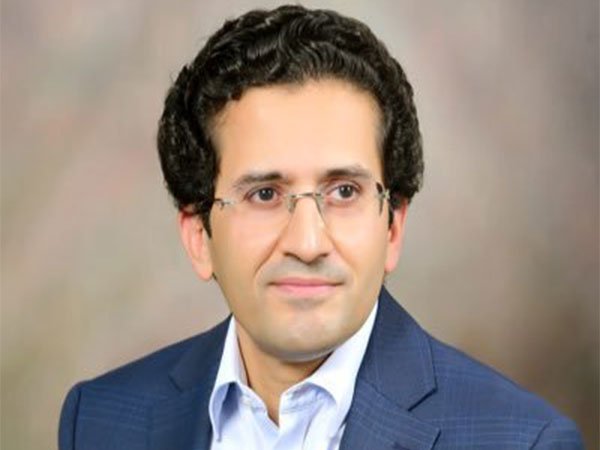
Addressing the workshop Jihad Azour, Director of the International Monetary Fund’s (IMF) Middle East and Central Asia Department urged to pursue broad-based, fair and predictable tax reforms to sustain macroeconomic stability, boost private investment and achieve stronger, more inclusive economic growth.
“Pakistan had made significant progress in restoring macroeconomic stability, rebuilding confidence, strengthening external buffers and supporting a gradual economic recovery despite repeated shocks and global uncertainty”, he remarked.
He credited Finance Minister Muhammad Aurangzeb, his colleagues in the government, the prime minister and parliament for the progress, saying the next challenge was to translate stabilization gains into stronger and more sustainable economic growth.
“The next milestone is to turn the stabilization into stronger and more durable growth,” Azour said, emphasizing the need to move beyond recurring adjustment cycles towards a more competitive, investment-friendly and inclusive economy.
He said the government’s reform agenda, supported by the IMF through its Extended Fund Facility (EFF), aimed to raise productivity, strengthen the private sector and create better economic opportunities for Pakistan’s younger generations.
Referring to the IMF’s Regional Economic Outlook, he said stronger policy frameworks and buffers had helped countries cushion external shocks, but inflationary pressures, fiscal constraints and financing needs were becoming increasingly evident.
He said a stronger, broader, fairer and more predictable tax system could improve fiscal sustainability while reducing distortions that discourage investment, productivity, business expansion and formal job creation.
Azour outlined four key themes for the workshop including credibility, growth, fairness and implementation, adding that Pakistan needed to preserve its hard-won stabilization gains by continuing to meet fiscal and external objectives, strengthening resilience and ensuring that reforms were sustained and firmly embedded in institutions.
He particularly stressed the importance of coordination between the federal government and provincial authorities, alongside engagement with the private sector and civil society.
Tax policy and tax administration, he said, must advance together, noting that a simpler policy framework makes administration easier, while effective administration lends credibility to policy reforms.
Azour urged participants to use the workshop to move beyond broad principles and identify practical policy measures, implementation priorities and follow-up mechanisms. He said policymakers needed to carefully assess the trade-offs involved in broadening the tax base without undermining economic recovery, simplifying the system while safeguarding revenues, coordinating federal and provincial responsibilities, and using technology without eroding public trust.
Highlighting the importance of collaboration, Azour said the workshop brought together policymakers, tax administrators, experts, private-sector representatives, provincial officials and development partners whose combined perspectives could help shape a coherent reform roadmap.
Concluding his remarks, he said Pakistan’s recent stabilization gains had created an opportunity that needed to be reinforced through transformative reforms. “Tax reform is at the heart of it and this workshop could be the catalyst moment in this journey,” he said, expressing hope for constructive discussions and practical outcomes from the two-day event.
Source: APP (Associated Press of Pakistan)