Abdul Samad Tariq
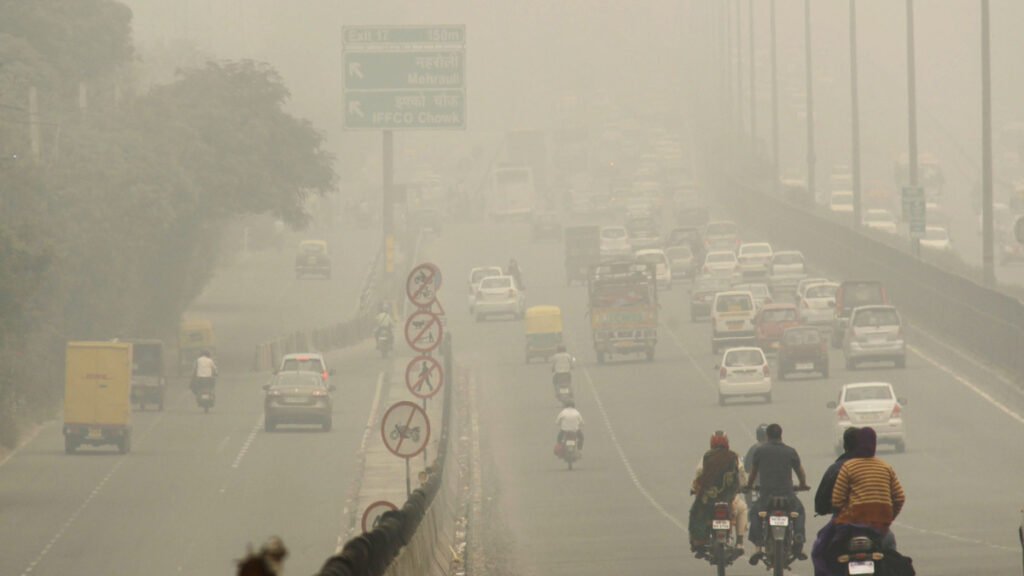
ISLAMABAD, Oct 28 (APP):Air pollution causes more than 200,000 deaths annually in Pakistan and costs the country up to 6.5 per cent of its gross domestic product (GDP), speakers at the Pakistan National Clean Air Conference 2026 said on Wednesday, calling for coordinated action, stronger monitoring and sustained investment to address the public health and environmental crisis.
A presentation by UNICEF highlighted the disproportionate impact on children, attributing 56,725 deaths among children under five to air pollution in 2023 and estimating 5.1 million healthy years of life lost in this age group.
Drawing on the State of Global Air Report 2025 and the Global Burden of Disease 2023 study, the presentation said the entire population of Pakistan lived in areas where annual average concentrations of fine particulate matter (PM2.5) exceeded the national standard of 15 micrograms per cubic metre. Some 92 per cent of the population lived in areas where concentrations exceeded 35 micrograms per cubic metre.
It added that 76.6 million children in Punjab and Khyber Pakhtunkhwa lived in areas where average PM2.5 concentrations exceeded the World Health Organisation’s least stringent interim target of 35 micrograms per cubic metre.
Cindy Kushner, UNICEF Pakistan’s chief of water, sanitation and hygiene and climate, environment and energy, highlighted the consequences for children’s survival, health and education.
She cited the closure of schools in 18 Punjab districts during the November 2024 smog episode, affecting 16 million children, and identified winter smog, crop burning, heatwaves and monsoon floods as recurring threats to children’s lives and learning.
The conference brought together government officials and development partners to discuss implementation of the National Clean Air Policy across the Islamabad Capital Territory, provinces, Azad Jammu and Kashmir and Gilgit-Baltistan.
Speaking during a session on partnerships for air quality management, moderated by Islamabad Environmental Protection Agency Director General Syed Ibrar Hussain, World Bank Country Director for Pakistan Bolormaa Amgaabazar said South Asia accounted for two million of the seven million premature deaths attributed to air pollution globally and was home to nine of the world’s 10 most polluted cities.
She said the World Bank’s 10-year strategy aimed to reduce air pollution in Pakistan by 35 per cent by 2035 under its “35 by 35” objective.
She cited the $300 million Punjab Clean Air Programme as part of a broader $1.26 billion package covering five countries in the Indo-Gangetic Plain and Himalayan foothills airshed. The Punjab government-owned programme included a central monitoring facility, known as the Green Building, with live dashboards tracking pollution levels.
Amgaabazar outlined priorities including targeted public health investment, greater private-sector participation in cleaner technologies and stronger partnerships among governments, philanthropic organisations and the public.
Maria-Jose Poddey, country director of GIZ Pakistan, said isolated projects could not resolve the crisis without complementary investments, capable institutions and coordinated action. Success, she said, should be measured by cleaner air and healthier communities rather than the number of projects launched.
Asian Development Bank Country Director for Pakistan Xiaoqin (Emma) Fan cited reductions of about half in PM2.5 levels in China and Mongolia over five to six years, saying sustained government commitment and development-partner support were essential. She said ADB assistance could help strengthen coordination, regulation and accountability, with each dollar invested potentially mobilising five to six dollars from other sources.
UNICEF Deputy Representative Hamida Ramadhani called for clean air and climate action to be integrated into development strategies from the planning stage, particularly in energy, transport, construction and agriculture. She stressed transparent data, stronger monitoring, environmental-law enforcement, cleaner schools and homes, preventive measures and greater youth participation in green initiatives.
Pakistan EPA Director Dr Mohsina Zubair said an implementation plan covering 90 policy actions across eight sectors had been prepared. These included agriculture, forests and land use, environmental diplomacy, energy, industry, transport, urban planning and waste management.
Guidelines were being developed to help provinces establish pollution baselines, assess health impacts, set targets and prepare action plans. The EPA was also working with provincial agencies to establish a Clean Air Secretariat and had submitted a $3 million to $5 million grant application to the Climate and Clean Air Coalition.
She said the Clean Environment Fund, financed through fees and penalties, would serve as a funding source. Priorities also included reviewing existing energy, transport and petroleum policies, harmonising national environmental quality standards with the WHO’s 2021 air quality guidelines and establishing a common platform for data sharing.
Punjab presented progress under its World Bank-supported clean-air programme. Azad Akram of the programme team said preparations had been completed within three to four months, with the programme becoming effective in June 2025 following board approval in March.
Plans included buying back 900 heavily polluting vehicles, with 225 targeted by June. To curb crop-residue burning, 5,000 super seeders were included under a subsidy scheme in which the government would pay 60 per cent of the cost and farmers the remaining 40 per cent. Of these, 4,800 had been delivered before the smog season.
Farmers using super seeders were also receiving a rental subsidy of Rs5,000 per acre, with a target of covering 1.2 million acres.
Akram said 600 electric buses were being procured, including 400 in the procurement process, with deliveries expected in March or April. The provincial government had separately launched another 2,700 electric buses.
Against a target of 120,000 electric two-wheelers and three-wheelers, the programme had received 607,000 applications, more than half from women. Deliveries of 100,000 vehicles were targeted by June.
Ten of 25 planned air quality monitoring stations had been installed, while the remaining 15 were expected by the end of November. The programme was expected to reduce PM2.5 emissions by 201 kilotonnes, lower Lahore’s PM2.5 concentrations by six micrograms per cubic metre and avoid 35.6 million tonnes of carbon dioxide emissions over 12 years.
Punjab EPA Director General Dr Imran Hamid Sheikh said more than 13,000 industrial units had been digitally mapped and placed under surveillance. Enforcement had resulted in around 200 first information reports and the sealing of more than 4,500 industrial units, while over 85 per cent had installed emission-control systems.
He said air quality monitoring stations had increased from two to 59, with the number expected to reach around 100 by June next year. Crop-residue burning had declined by more than 35 per cent over two years, supported by machinery subsidies, drone surveillance and 67 quick-response units in agricultural fields.
Khyber Pakhtunkhwa EPA Director General Tariq Ali Khan highlighted unregulated transport and rapid construction in Peshawar, saying the province was expanding air quality sensors and smart cameras and pursuing monitoring projects with international partners.
Balochistan EPA Director General Ibrahim Baloch said the province’s vast area, arid conditions, industrial activity, coal mining, shipbreaking and winter inversions in Quetta complicated pollution control. Limited funding, calibrated equipment, testing laboratories and specialised staff constrained monitoring across 42 districts. He sought development-partner support for equipment, financing and continuous monitoring systems.
The conference’s second day will focus on transport, agriculture, waste, industry, brick kilns, clean cooking, governance and institutional coordination. Discussions on financing and carbon markets will precede a closing compact aimed at securing commitments from federal and provincial governments and development partners.
Source: APP (Associated Press of Pakistan)