ISLAMABAD, Oct 20 (APP):Country needs to move beyond discussions on artificial intelligence (AI) and data analytics and focus on how these technologies can improve public services, create jobs and address everyday challenges, experts said on Tuesday.
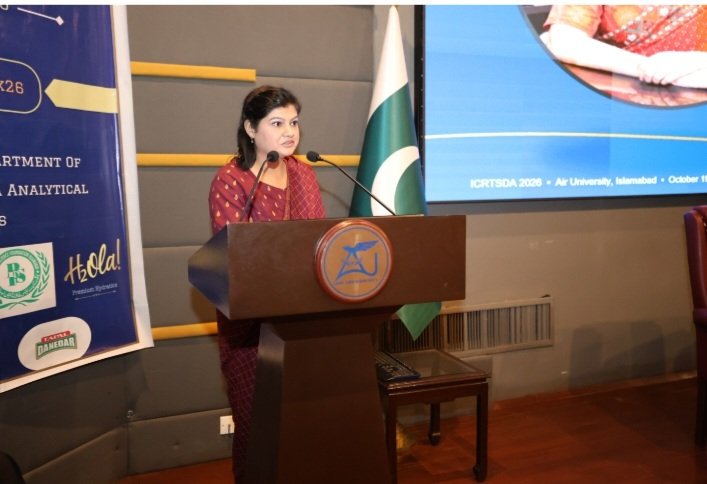
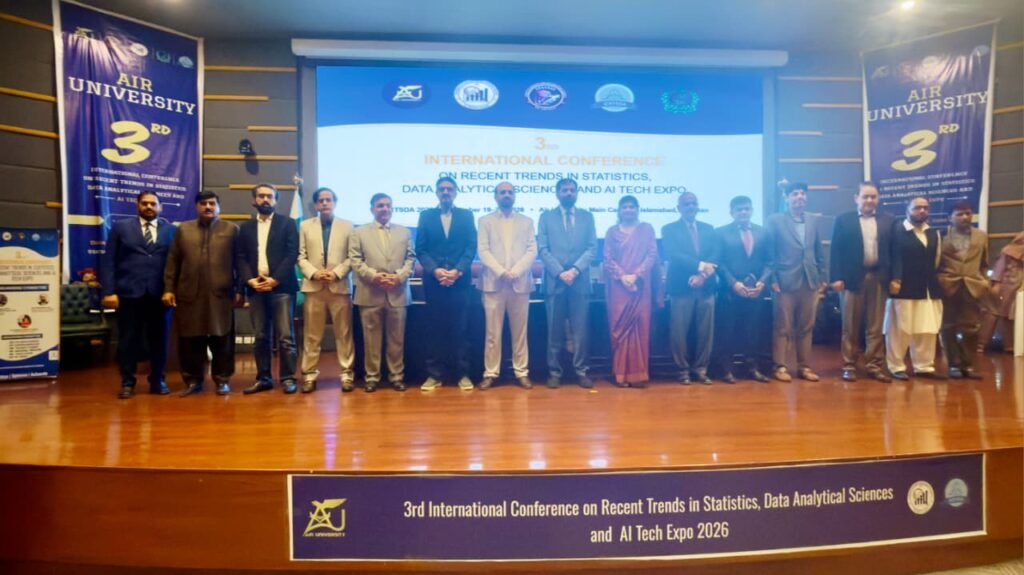
They were speaking at the 3rd International Conference on Recent Trends in Statistics, Data Analytical Sciences and AI Tech Expo 2026, held at Air University, Islamabad.
Dr Ghulam Ali Mallah of the Inter Boards Coordination Commission (IBCC) also offered paid internship opportunities to students, encouraging them to gain practical experience in managing and analysing the institution’s extensive datasets.
Addressing the event as chief guest, Dr Muhammad Tahir Noor, Secretary, Planning, Development and Special Initiatives, said technological progress should not be judged solely by the sophistication of new applications but by how effectively they improved people’s lives.
“The progress of our technology sector should be measured partly by the opportunities it creates for others,” he said.
Dr Noor stressed that Pakistan needed technology designed around its own circumstances, particularly affordability, internet connectivity, language barriers and varying levels of digital literacy. A successful innovation, he observed, should make it easier for a small business to operate, a teacher to support students or a citizen to access government services.
He also highlighted the changing nature of employment in the age of AI, urging universities and employers to equip young professionals with practical skills, sound judgement and the ability to adapt as technologies evolved.
Former Chief Statistician of Pakistan Dr Naeem uz Zafar drew attention to the enormous potential of data already collected in the country. Referring to Pakistan’s first digital population census, he said more than 40 million structures had been geocoded, providing valuable information that could transform development planning.
He explained that combining census findings with administrative and geographical data could help governments identify where schools, hospitals and other essential services were most needed.
“It is a process,” Dr Zafar said, emphasising that meaningful data integration required a strong foundation, cooperation among institutions and a clear understanding of how information could support better decisions.
He also encouraged young professionals to remain committed to improving Pakistan’s institutions, saying meaningful change depended on people willing to introduce new ideas and challenge established practices.
Former Surveyor General of Pakistan Major General Kamal Azfar, HI(M), highlighted how geospatial technologies could make cities more efficient and resilient.
Using Islamabad as an example, he explained that integrating information on roads, buildings, weather, population, drainage and other infrastructure could help create a digital model of the city, commonly known as a digital twin.
Such systems, supported by AI and modern sensors, could enable authorities to anticipate urban challenges, improve civic services and plan more effectively for climate-related risks, he said.
Asim Javid, CEO of AI Geo Navigators, highlighted that statisticians deserved a stronger role in policymaking and industry, as AI systems could produce dependable results only when the underlying data was accurate and properly analysed.
He also urged students to remain open to acquiring new skills and adapting to changing workplace demands, describing adaptability as essential for succeeding in an increasingly competitive technology sector.
Pakistan Bureau of Statistics Director Rizwan Bashir said conventional surveys and periodic reports alone were no longer sufficient to meet the country’s rapidly changing information needs.
He called for greater use of machine learning, administrative records and internationally recognised statistical standards to produce timely information without compromising accuracy or public trust.
Conference Chair and Head of the Department of Statistics and Data Analytical Sciences Dr Ammara Nawaz Cheema said the university aimed to prepare graduates who could contribute to industry from the beginning of their professional careers.
She noted that students were already developing practical projects and exploring business opportunities during their studies, reflecting the department’s emphasis on linking academic knowledge with real-world applications.
Entrepreneur Sikandar Zaman, Chairman and Founder of Pakistan Health Parliament, questioned whether the growing volume of research and data in Pakistan was being used effectively to solve problems.
Drawing on his experience in healthcare, he pointed to the difficulties businesses faced in accessing useful data and translating research into workable solutions.
He encouraged young innovators to focus on execution rather than technology.
He also emphasised discipline, persistence and calculated risk-taking, describing Pakistan’s young population as one of its greatest resources for future growth.
Dr Mallah, while offering paid internships at IBCC, encouraged students to apply their statistical and analytical skills to real institutional data and gain first-hand experience in professional data management.
He stressed that universities and industry needed to work together more closely, noting that while universities generated knowledge, industry played an important role in translating research into useful products, services and economic opportunities.
Dr Mallah also discussed efforts to reform Pakistan’s examination system by reducing reliance on rote learning and encouraging conceptual understanding, critical thinking and problem-solving skills.
The interactive panel discussion also involved students, whose questions focused on unemployment, inflation, poverty, career opportunities and the skills needed to succeed in an AI-driven economy.
The conference was attended by academics, researchers, government officials, technology entrepreneurs and students.
The event was supported by the Higher Education Commission, Pakistan Science Foundation, Helping Hand for Relief and Development, and AI Geo Navigators.
Source: APP (Associated Press of Pakistan)