ISLAMABAD, Oct 20 (APP):The Punjab government plans to invest Rs1 billion in a two-year dairy mechanization project to subsidize modern machinery for 6,400 farmers across all 41 districts, aiming to reduce milk spoilage, improve productivity and strengthen the province’s dairy supply chain, a senior livestock official told Wealth Pakistan.
Under the proposed scheme, the government will cover 60 percent of the eligible machinery cost, while farmers will pay the remaining 40 percent, with the subsidy capped at Rs500,000 per beneficiary, said Dr Muhammad Naeem Kanwar, Director General (Production) at the Punjab Livestock Department.
He said that Rs461 million had been allocated for the project in the current fiscal year, with the remaining amount earmarked for subsidy disbursement during 2027-28.
The initiative is designed to address milk losses caused by inefficient handling, inadequate refrigeration and gaps in cold-chain infrastructure, while reducing dependence on manual labour and modernizing dairy farming practices.
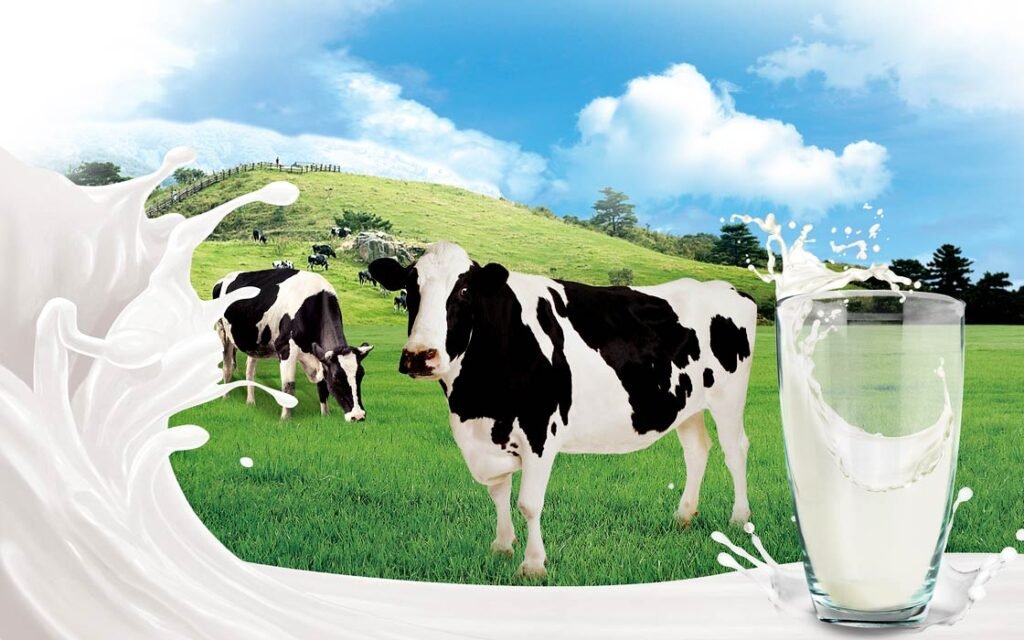
Punjab accounts for approximately 74 percent of Pakistan’s total milk production, making improvements in storage, processing and transportation crucial to reducing waste and increasing farmers’ earnings.
According to the latest agricultural census data, Punjab has a livestock population of 104.2 million animals, including 29.56 million buffaloes, 26.97 million cattle and 31.31 million goats. The province contributes 62 percent to agricultural GDP and 14.04 percent to national GDP.
Dr Kanwar said the scheme covered 11 categories of machinery and equipment to improve milk production, handling, processing, storage and overall farm management.
The equipment includes single- and double-cluster milking machines, bucket milking systems, 50-litre milk-cooling cans, milk chillers, heating tanks for yoghurt production, butter churners, semi-automatic packing machines, weighing scales, 13-tonne total mixed ration feed wagons and mechanical cattle crushes.
The project also envisages training programmes and technical assistance to help farmers and relevant personnel use the equipment effectively.
At the district level, Faisalabad has the highest projected allocation, with up to 335 beneficiaries over the two-year period, followed by Rahim Yar Khan with 322, Bahawalnagar with 284, Sargodha with 270 and Okara with 267.
Lahore has an allocation for up to 138 beneficiaries, while Murree has the smallest projected allocation, with 10 farmers.
Under the proposed implementation mechanism, farmers will submit applications at the tehsil level. After scrutiny, eligible applicants will be selected through electronic balloting at the district level, Dr Kanwar said.
The project will also engage consultants to finalise machinery specifications, prequalify suppliers, inspect equipment and strengthen the technical capacity of stakeholders involved in implementation.
He said dairy farming remained a major source of food, employment and income for rural households, particularly small-scale farmers who depend on regular milk sales for their livelihoods.
“As most livestock in Punjab are owned by small and resource-constrained farmers, the two-year project is expected to help them become more economically empowered,” he added.
Source: APP (Associated Press of Pakistan)