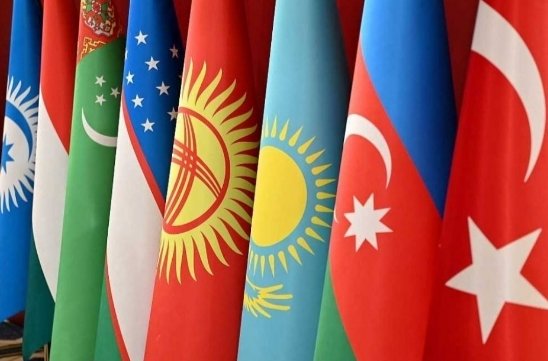
ISLAMABAD, Oct 27 (APP):The Organization of Turkic States (OTS) is increasingly emerging as an significant platform for regional economic integration, trade expansion, transport connectivity and technological cooperation, with Uzbekistan playing a significant role in advancing its practical economic agenda.
Over the past five years, the organization has undergone a substantial transformation, evolving from a framework centred largely on cultural and historical ties into a platform promoting concrete cooperation in trade, investment, logistics,
digitalisation and education.
The institutional development of the OTS has been supported by its multi-tier structure, comprising the Council of Heads of State, Council of Foreign Ministers, Committee of Senior Officials, Council of Elders and the Secretariat, said a release issued by Embassy of Uzbekistan in Islamabad here on Tuesday.
The adoption of the “Turkic Vision–2040” strategy in 2021 further established a long-term framework for sectoral roadmaps and regional cooperation priorities.
Uzbekistan has emerged as one of the key drivers of this transformation. Under the leadership of President Shavkat Mirziyoyev, the country has promoted initiatives in transport connectivity, industrial cooperation, investment and digital transformation.
The 2022 Samarkand Summit marked an important milestone, with decisions to establish the Turkic Investment Fund and broaden the organization’s economic cooperation agenda. Meanwhile, the activities of the Parliamentary Assembly of Turkic States (TURKPA) have contributed to efforts to harmonise legislative approaches in trade, transport regulation and humanitarian cooperation.
Economic cooperation is increasingly becoming a central pillar of the organization. Its member states collectively represent approximately 178 million people, with a combined nominal gross domestic product exceeding $1.8 trillion and foreign trade turnover of more than $1.1 trillion.
According to estimates cited by the OTS Secretariat, intra-organizational trade has reached approximately $22–23 billion, reflecting a substantial increase compared with the beginning of the decade.
Uzbekistan’s economic engagement with OTS member states has also expanded considerably. By the end of 2025, its trade turnover with member countries had exceeded $9 billion, compared with approximately $4.2 billion in 2019.
Industrial cooperation between Uzbekistan and Türkiye provides another example of the growing economic partnership. More than 2,000 enterprises involving Turkish capital operate in Uzbekistan, while joint investment projects are estimated to exceed $5 billion. These investments are concentrated in sectors including textiles, construction materials, electrical engineering and food processing.
Transport and logistics connectivity represents another strategic priority. The Energy cooperation is also gaining momentum, particularly through proposals for a transregional green energy corridor to export renewable electricity from Central Asia and the South Caucasus towards European markets. Azerbaijan, Kazakhstan and Uzbekistan have intensified coordination on electricity transmission infrastructure and grid synchronisation.
Digital transformation has emerged as another priority. The combined digital economy of OTS member states is estimated to exceed $110 billion, while several participating countries have recorded annual sectoral growth rates of 12–18 per cent.
Uzbekistan’s IT services exports surpassed $1 billion by the end of 2025, reflecting the country’s expanding presence in international technology markets. Regional initiatives are also promoting cooperation in digital services, innovation and advanced technology education.
Humanitarian and educational exchanges continue to complement these economic initiatives. Institutions including the International Turkic Academy, TURKSOY, TURKPA and the Union of Turkic Universities support scientific collaboration, cultural preservation and academic mobility. Tourism cooperation, including historical, cultural and pilgrimage routes, has further strengthened people-to-people contacts among member states.
Looking ahead, the OTS has considerable potential to deepen engagement with other regional partners, including Pakistan. Priorities include reducing non-tariff trade barriers, digitalising customs procedures, strengthening transport and logistics links, expanding technological cooperation and promoting academic and expert exchanges.
Closer engagement between the OTS countries and Pakistan could create additional opportunities for trade diversification, investment, regional connectivity and cooperation across Central and South Asia.
The organization’s future effectiveness will depend on translating its growing institutional framework and shared economic interests into practical projects that generate sustainable growth and mutual benefits for its member states and regional partners.
Source: APP (Associated Press of Pakistan)