By: Shams Abbasi
ISLAMABAD, Oct 21 (APP):World leaders and international organizations on Wednesday called for greater public investment in children’s health, education, nutrition and social protection, emphasizing that child-friendly budgeting, sustainable financing and stronger international partnerships are essential to building human capital, reducing poverty and securing long-term economic growth.
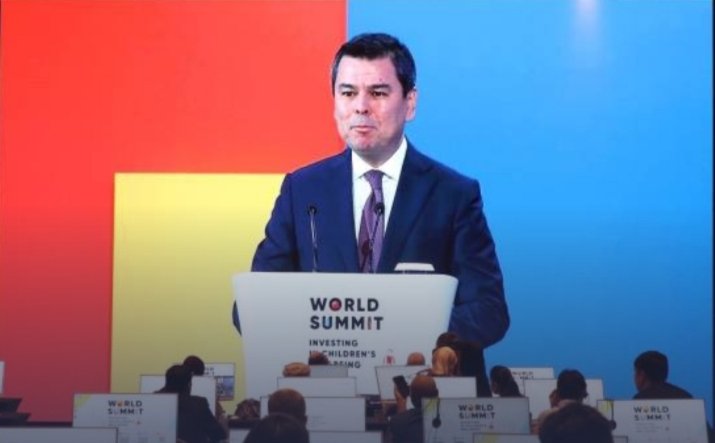
The call came at the opening of the two-day World Summit on Investing in Children’s Well-being in Samarkand, Uzbekistan, which has brought together more than 600 participants from over 100 countries, including political leaders, ministers, United Nations officials, first ladies, development experts and representatives of international institutions.
The summit is focusing on mobilizing financial resources, strengthening social protection systems and ensuring that public spending translates into measurable improvements in children’s lives.
Participants are also examining how governments can prioritize children in national development strategies while addressing fiscal constraints and competing economic demands.
Hosted by Uzbekistan at the Silk Road Complex, the summit reflects growing international recognition that investment in children is a critical component of sustainable development. Inadequate spending on healthcare, education and nutrition can deepen poverty, weaken workforce productivity and increase the long-term economic burden on governments.
The opening ceremony featured a message from Uzbek President Shavkat Mirziyoyev, while First Lady Ziroat Mirziyoyeva addressed the gathering alongside senior United Nations officials and representatives of participating countries.
United Nations Secretary-General António Guterres also sent a message, delivered by the UN Resident Coordinator in Uzbekistan, highlighting the importance of international cooperation and collective action to advance children’s well-being.
The discussions underscored the need to translate international commitments into practical policies, adequate financing and measurable targets, with particular attention to children living in poverty, those with disabilities and those exposed to violence, exploitation and social exclusion.
Participants stressed that governments needed to expand fiscal space for child-focused programmes, strengthen partnerships with international development institutions and ensure that public budgets adequately cover essential services.
Child-sensitive budgeting emerged as a key area of discussion, with participants emphasizing that investment decisions should reflect children’s needs and prioritize programmes capable of delivering long-term social and economic returns.
UN Deputy Secretary-General Amina Mohammed, addressing the conference through a video message, highlighted the importance of protecting children and ensuring that every child has access to opportunities, essential services and a safe environment.
The summit also called for accelerated collective efforts to achieve the Sustainable Development Goals related to children, improve access to education and healthcare, strengthen child protection and expand social safety nets.
Discussions covered digital protection and the need to equip children with digital skills while safeguarding them from online exploitation and other emerging risks. Participants also stressed the importance of reaching children left behind by poverty, inadequate public services and unequal access to opportunities.
The gathering further highlighted the relationship between child protection and lasting peace, arguing that children who grow up in safe and supportive environments are better positioned to contribute to stable societies and productive economies.
Uzbekistan presented its ongoing social reforms as part of the broader effort to strengthen support for vulnerable families and improve children’s access to essential services.
Addressing the summit, the Uzbek leadership emphasized that children were the country’s most valuable asset and that every child in need should have access to protection, education, healthcare and rehabilitation.
The country has pursued reforms in social protection and poverty reduction under President Mirziyoyev, with a focus on strengthening services for vulnerable households and improving safeguards for children. Uzbekistan has also highlighted efforts to combat child labour and address child sexual abuse and exploitation.
Participants called for continued progress in ensuring that no child is left behind because of poverty, disability, illness or a lack of access to public services.
Healthcare financing was another major area of concern, particularly childhood cancer, where significant disparities persist between high-income and low- and middle-income countries.
The Second International Congress on Childhood Cancer is being held alongside the summit under the theme “From Cure to Quality of Life.” It has brought together specialists to discuss early diagnosis, advanced treatment, access to essential medicines and improved long-term care for children affected by cancer.
According to the World Health Organization, around 400,000 children and adolescents develop cancer worldwide each year. While survival exceeds 80 percent in high-income countries, it remains below 30 percent in many low- and middle-income countries.
The disparity has reinforced calls for adequate and predictable financing for healthcare systems, specialized treatment facilities and essential medicines, particularly in developing countries where limited resources can prevent children from receiving timely care.
Participants also examined early childhood development, inclusive education, childhood obesity, mental health and the need to improve services for children with disabilities.
The broader discussions highlighted the importance of coordination among government departments responsible for education, healthcare and social protection. Better coordination, delegates noted, can help identify vulnerable children earlier, reduce gaps in service delivery and ensure that public resources reach those most in need.
Pakistan was represented in a key discussion by Ayesha Haroon, founder and chief executive of the Oasis Trust for Autism, who joined international experts examining approaches to increasing investment in children’s well-being.
The summit has also provided an opportunity for international participants to learn about Uzbekistan’s social development initiatives through visits to healthcare, education and welfare facilities supporting children, mothers, families and people with disabilities.
The event is being organized by Uzbekistan’s National Agency for Social Protection, the ministries of Health and Preschool and School Education, and the Zamin International Public Foundation, with support from UNICEF, the World Health Organization, the World Bank and other international institutions.
Bangladesh Foreign Minister Khalilur Rahman, who is serving as president of the 81st session of the United Nations General Assembly, was among the prominent participants.
The summit is scheduled to conclude on October 22 with the adoption of the Samarkand Declaration on Investing in Children’s Well-being, which is expected to provide a framework for strengthening child protection, expanding essential services, mobilizing resources and advancing international cooperation.
The declaration is expected to reinforce a shared commitment to making investment in children a central priority of national development policies, recognizing that the well-being of future generations is closely linked to economic resilience, social stability and sustainable prosperity.
Source: APP (Associated Press of Pakistan)